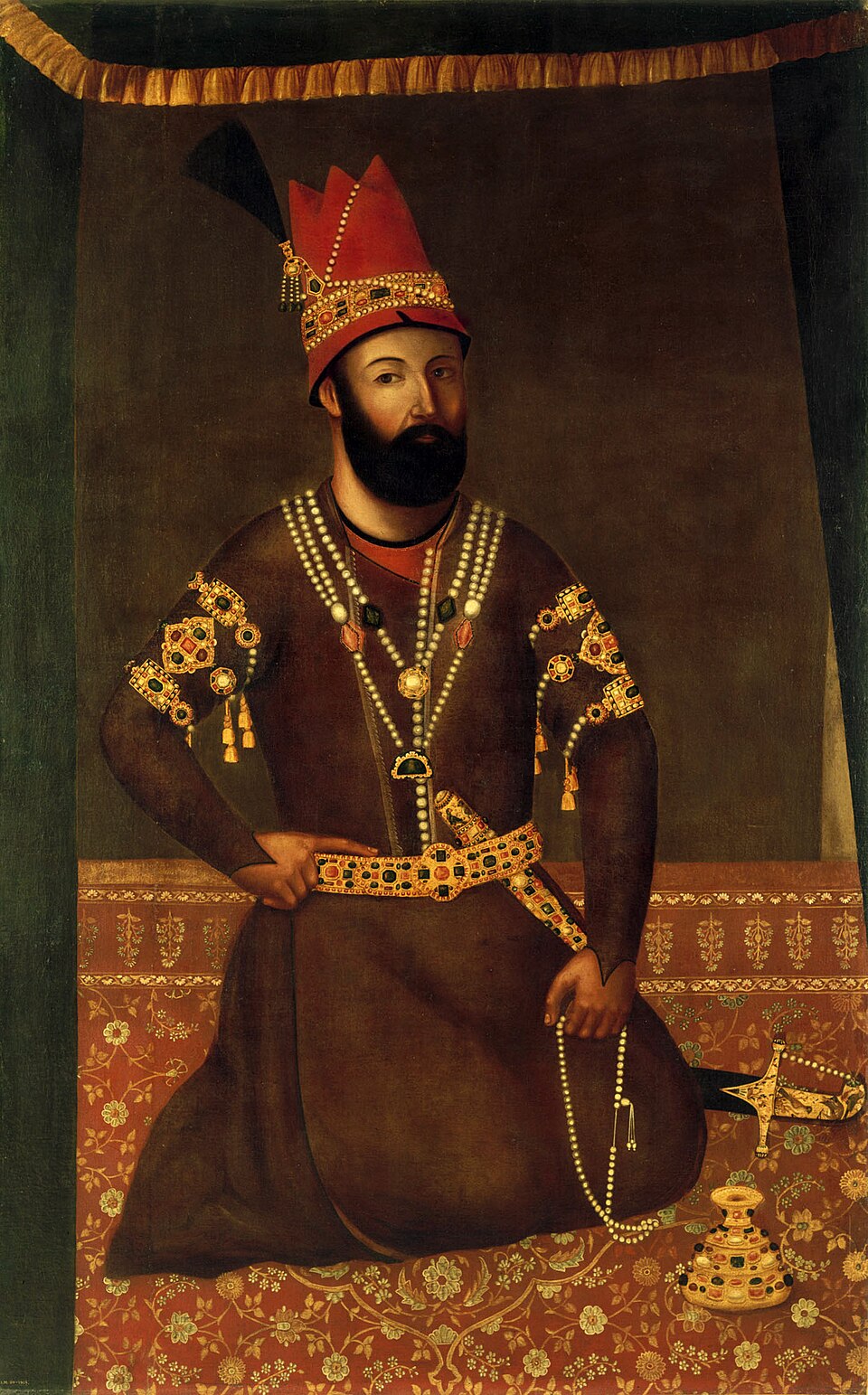
Who they were
Nader Shah (1688–1747, r. 1736–47) came from the Afshar Turkoman tribe of Khorasan and rose from obscurity as a military commander. Later writers have often called him the last great Asian conqueror and compared him to Napoleon.
What they did
Nader restored a collapsing Iran: he drove out the Afghan occupiers, retaking Isfahan in 1729, expelled Ottoman and Russian forces, then deposed the Safavid figureheads and crowned himself shah in 1736. In India he crushed the Mughals at Karnal and sacked Delhi in 1739; the massacre there — for which the death figures vary — and the plunder, including the Peacock Throne and the Koh-i-Noor diamond, are notorious, and the loot let him remit Iran’s taxes for years. He also campaigned into Central Asia, built a navy in the Gulf, and proposed folding Shiism into Sunni Islam as a fifth school of law, the Jafari school — a compromise that found no takers.
Legacy
Growing paranoia and cruelty marked his last years — he had his own son blinded, then regretted it — and in 1747 his own officers assassinated him. He saved Iran’s territorial existence and broke it financially. His empire dissolved at his death, and Durrani Afghanistan was founded from its eastern wreckage by his general Ahmad Shah.