Overview
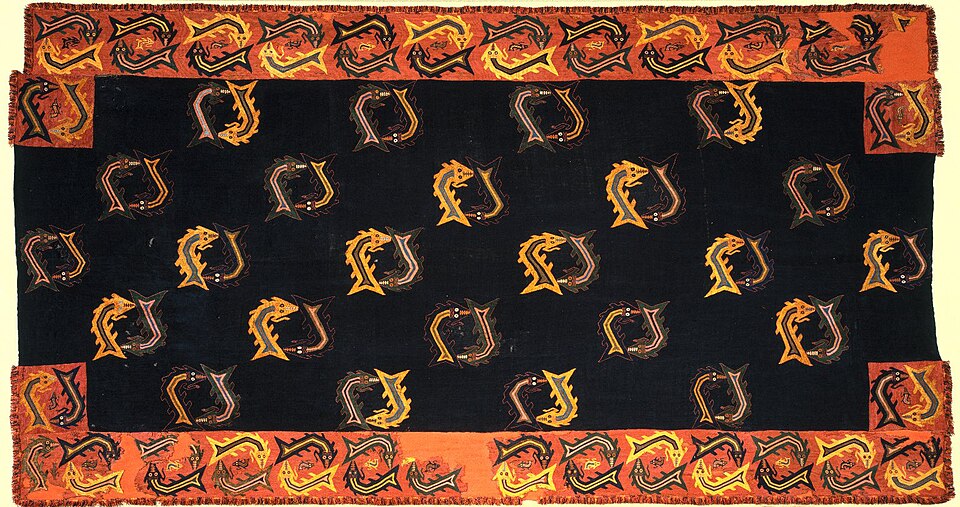
The textiles were woven from cotton and camelid fiber and densely embroidered in brilliant colors. Most survive as burial wrappings around mummy bundles in the dry desert of the Paracas peninsula.
Description
Their surfaces teem with repeated figures — flying shamans, birds, fish, and composite beings — in vivid polychrome embroidery. The technical skill and range of colors are extraordinary for their age.
History and legacy
The Paracas mantles reveal the wealth, beliefs, and artistry of a coastal Andean society. Their tradition fed into the later Nazca culture, and they are prized treasures of Andean art.