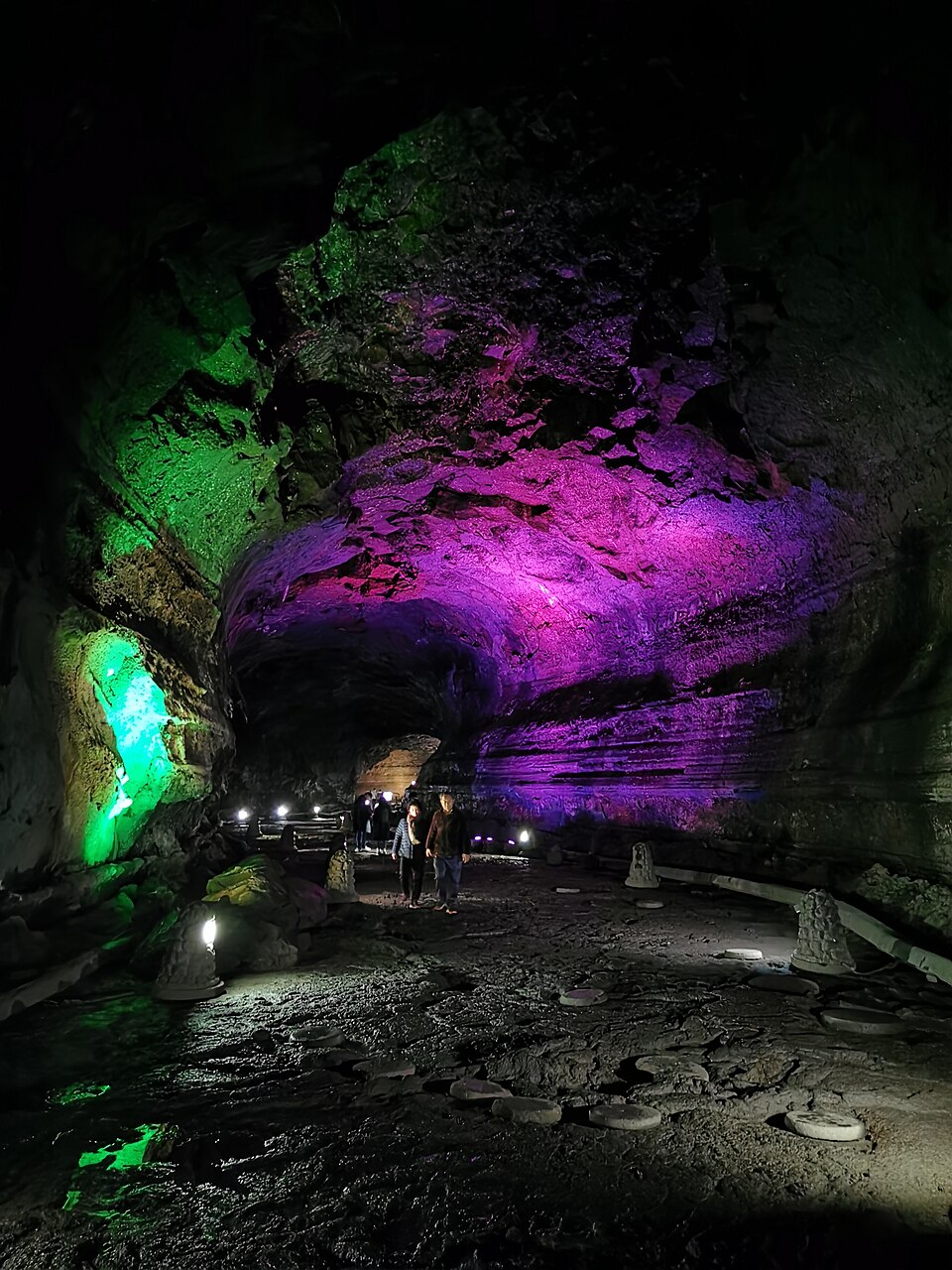
Overview
The tube formed 100,000 to 300,000 years ago when the outside of a lava flow cooled and hardened while the molten interior drained away, leaving a tunnel. Inside are lava stalactites, rafts of hardened crust carried along by the flow, and ripple marks left by the last liquid rock to pass. It is a constant eleven to twenty-one degrees and wet underfoot; the ceiling is high but the floor is uneven.
Highlights
Take a jacket even in August and shoes with grip; the floor is broken lava. The lava column at the end is the largest known in the world and is the turning point of the walk. It is part of the Jeju Volcanic Island UNESCO listing with Seongsan and Hallasan, and pairs with Seongsan in one day on the east coast.