Overview
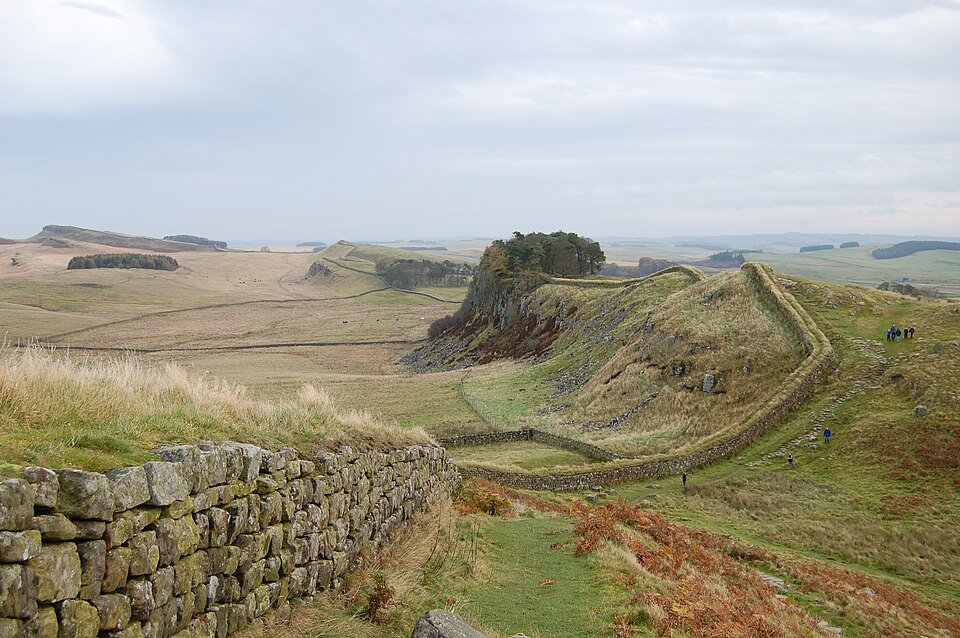
Running roughly 117 km (80 Roman miles) from the Tyne to the Solway, the wall was built of stone by the legions, with a fort about every Roman mile, larger garrison forts, a ditch, and a rearward earthwork called the Vallum. Substantial stretches and several forts, such as Housesteads, still stand.
Description
It controlled movement and trade across the frontier and displayed Roman power rather than sealing the border absolutely. Named after Hadrian, who visited Britain in 122, it was briefly superseded northward by the Antonine Wall before the frontier fell back to it.
History and legacy
Hadrian’s Wall is a UNESCO World Heritage Site and the best-known monument of Roman Britain, its path now a National Trail. It remains a rich source for understanding the Roman army and frontier life.