Overview
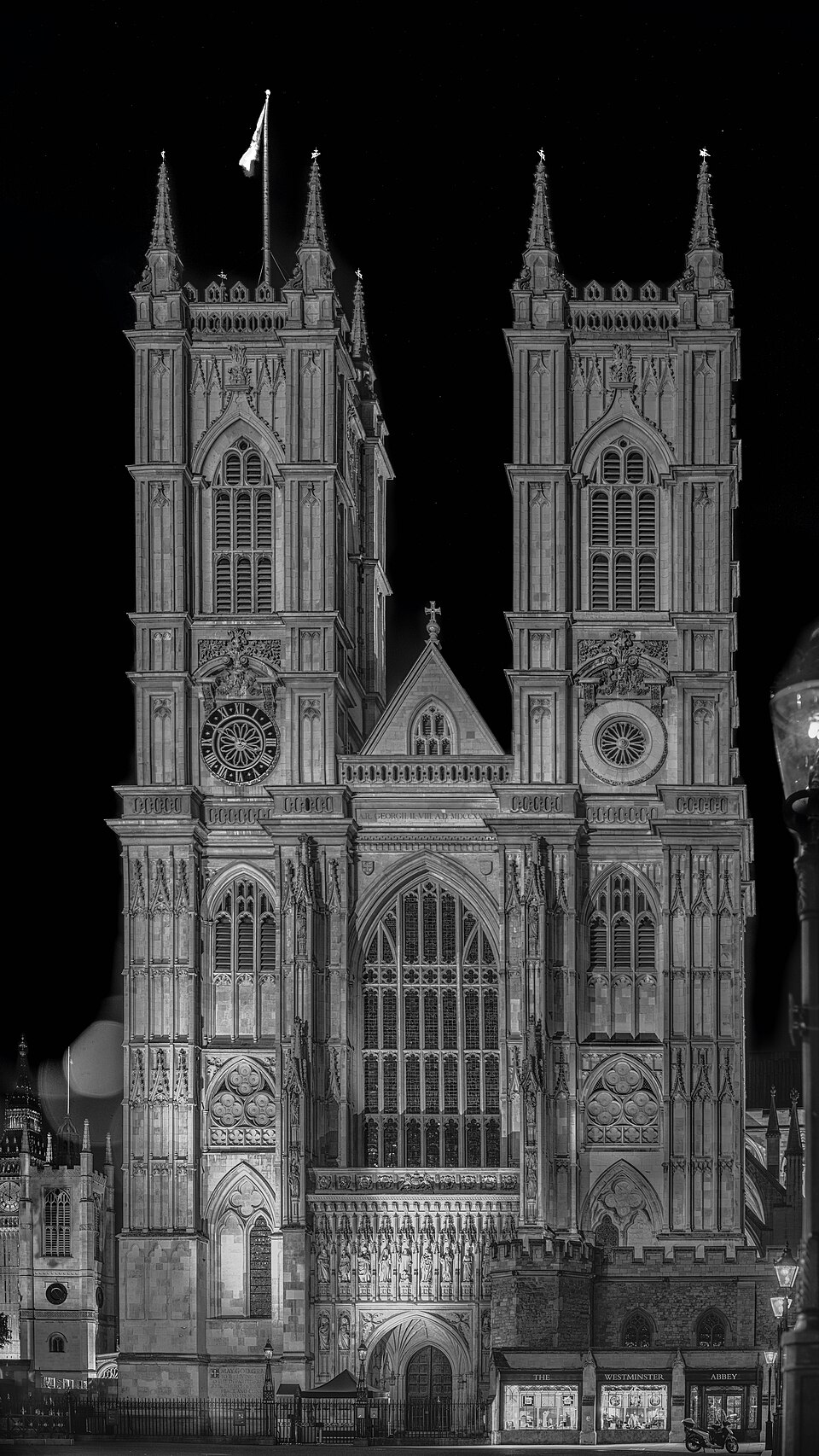
Westminster Abbey stands beside Parliament in London on the site of Edward the Confessor’s 11th-century church, where William the Conqueror was crowned on Christmas Day 1066. The present building was begun in 1245, when Henry III rebuilt the church in the new Gothic style as a shrine for the Confessor and a coronation church for his dynasty.
Description
The abbey carries the highest Gothic vault in England, French in inspiration, over a plan crowded with seven centuries of monuments: the shrine of Edward the Confessor and the Coronation Chair behind the high altar, the fan-vaulted Lady Chapel added by Henry VII in 1503–1519, Poets’ Corner with its memorials from Chaucer onward, and the graves of Newton and Darwin. The west towers, designed by Nicholas Hawksmoor, completed the church in 1745.
History and legacy
Nearly every English and British coronation since 1066 has been held in the abbey, along with royal weddings and funerals, and since 1920 it has held the Grave of the Unknown Warrior. A monastery until Henry VIII’s dissolution, it survived as a royal peculiar answering directly to the crown. With the Palace of Westminster it was inscribed on the UNESCO World Heritage list in 1987, and it remains the ceremonial heart of the British state.