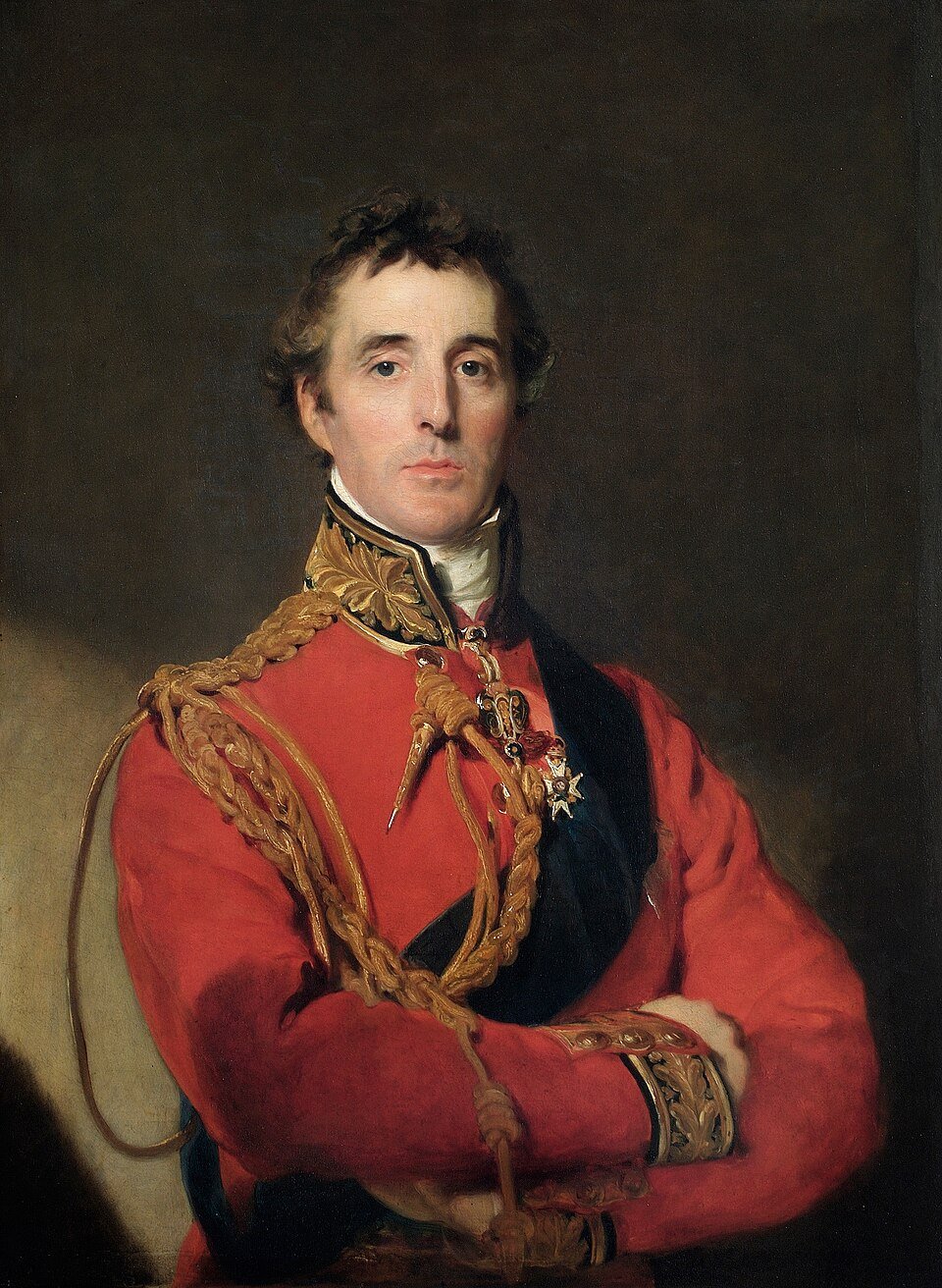
Who they were
Arthur Wellesley made his name in India, then led allied forces through the Peninsular War against France in Spain and Portugal. In 1815, with the Prussians under Blücher, he defeated Napoleon at Waterloo, ending the Napoleonic Wars. Entering politics, he served as prime minister (1828–30) and oversaw Catholic Emancipation in 1829.
What they did
As a commander he was noted for defensive skill and careful logistics; as a Tory statesman he was a conservative force in an age of reform.
Legacy
Waterloo made Wellington a national hero, commemorated across Britain, and ‘the Iron Duke’ became a byword for steadfastness. His victory shaped a European peace that broadly held for decades.