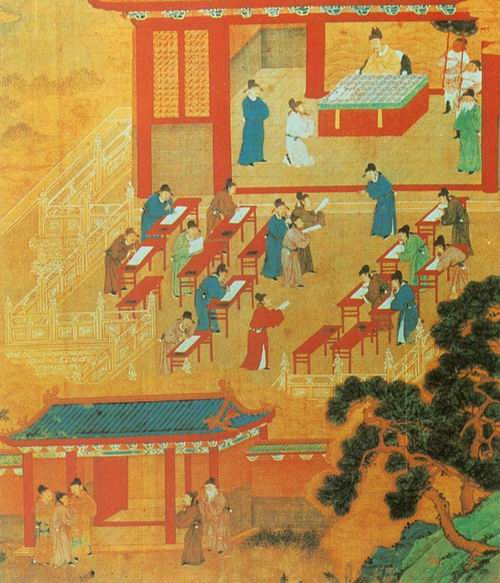
What happened
Emperor Wen of the Sui introduced examination categories for selecting officials; tradition credits the jinshi degree to the reign of Emperor Yang in the early 7th century. The system was abolished in 1905 amid the late-Qing reforms.
Background
The examinations matured under the Tang: Wu Zetian expanded them — including palace examinations — to counter the old aristocracy. Under the Song they became the main route to office, with papers anonymized and recopied to prevent favoritism. The Ming and Qing fixed the rigid “eight-legged essay” on Zhu Xi’s canon.
Consequences
The system created the scholar-official elite and the prestige of study. Though preparation favored the wealthy, it embodied a meritocratic ideal and unified elite culture around the classics for 1,300 years. Enlightenment Europeans admired it, and it is acknowledged as an influence on modern civil-service examinations.