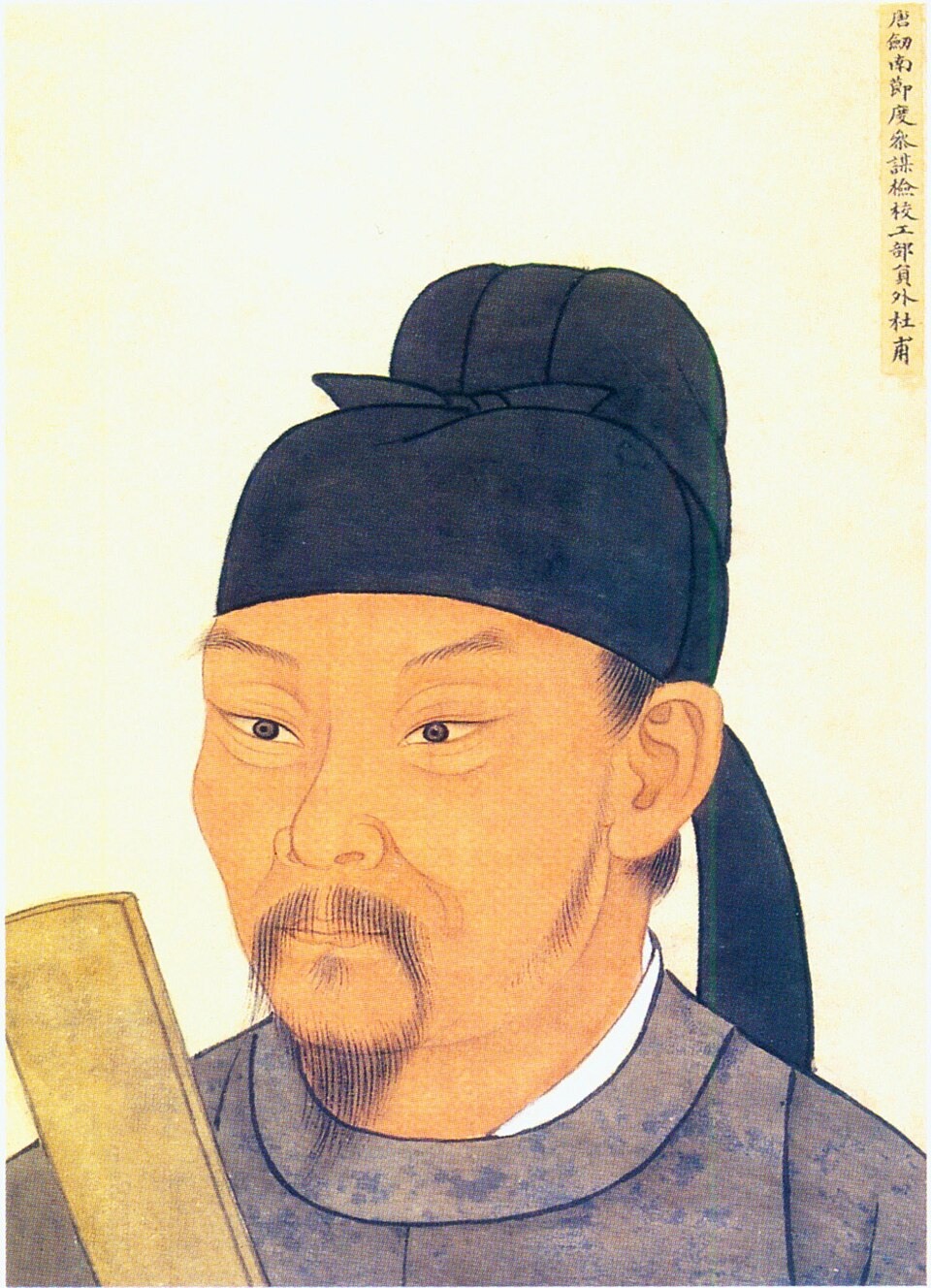
Who they were
A Tang poet honored as the “Poet Sage” (詩聖). His official career stalled — he failed the jinshi examination — and about 1,400 of his poems survive.
What they did
The An Lushan Rebellion made him the great witness-poet of war. Held in fallen Chang’an, he wrote “Spring View” — “the state is broken; mountains and rivers remain” — and his “Three Officials” and “Three Partings” cycles record conscription and loss. Poverty and wandering later brought him to Chengdu, where the years at his thatched cottage produced serene late masterpieces. He died on a river journey in 770. Technically, his work is the summit of regulated verse (律詩).
Legacy
He is paired with Li Bai as the twin peaks of Chinese poetry — Li the untrammeled romantic, Du the moral craftsman. Later ages called his work a “poetic history” of his times.