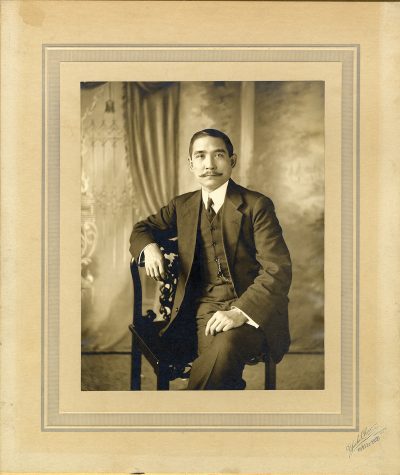
Who they were
Trained as a medical doctor in Hong Kong, he turned to revolution: he founded the Revive China Society in 1894 and the Tongmenghui in Tokyo in 1905, and articulated the Three Principles of the People — nationalism, democracy, and people’s livelihood.
What they did
After the Wuchang Uprising of 1911, he became provisional president of the Republic of China on January 1, 1912, then yielded the presidency to Yuan Shikai. He later reorganized the Kuomintang and in 1924 accepted cooperation with the young Communist Party. He died in Beijing in 1925.
Legacy
The Republic of China honors him as Father of the Nation; the People’s Republic honors him as forerunner of the revolution.