What happened
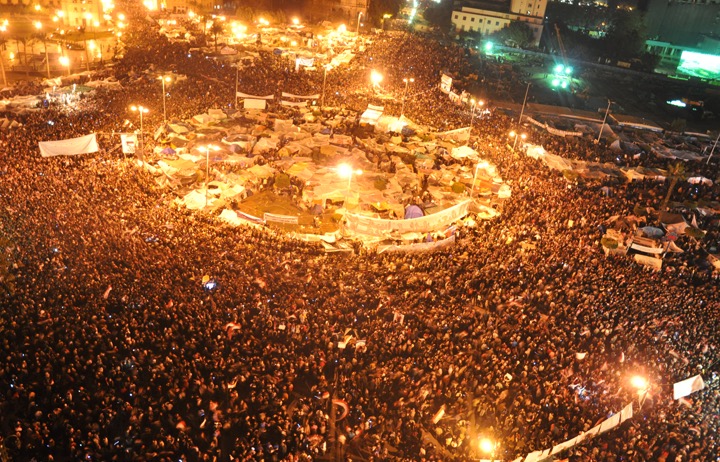
On 25 January 2011, mass protests began across Egypt — Cairo’s Tahrir Square became the symbol — demanding bread, freedom, and social justice and the end of President Hosni Mubarak’s nearly 30-year rule. The security forces’ crackdown failed to stop the protests; an official government fact-finding commission later put the death toll at about 850. On 11 February 2011 Mubarak resigned, and the Supreme Council of the Armed Forces took interim power.
Background
The revolution was part of the Arab Spring, following the Tunisian uprising weeks earlier, and mobilization spread through social media and satellite television as well as on the street. Grievances included police brutality — the 2010 death of Khaled Said became a rallying case — the long state of emergency, corruption, poverty, and unemployment.
Consequences
Free elections brought Mohamed Morsi of the Muslim Brotherhood to the presidency in 2012. After renewed mass protests the military removed him in July 2013; in August 2013 security forces dispersed pro-Morsi sit-ins in Cairo, killing hundreds in a single day — rights groups put the toll at the Rabaa sit-in alone at over 800, and estimates vary — and a broad crackdown on the Muslim Brotherhood followed. Abdel Fattah el-Sisi was elected president in 2014. Assessments of the revolution’s legacy remain deeply contested.