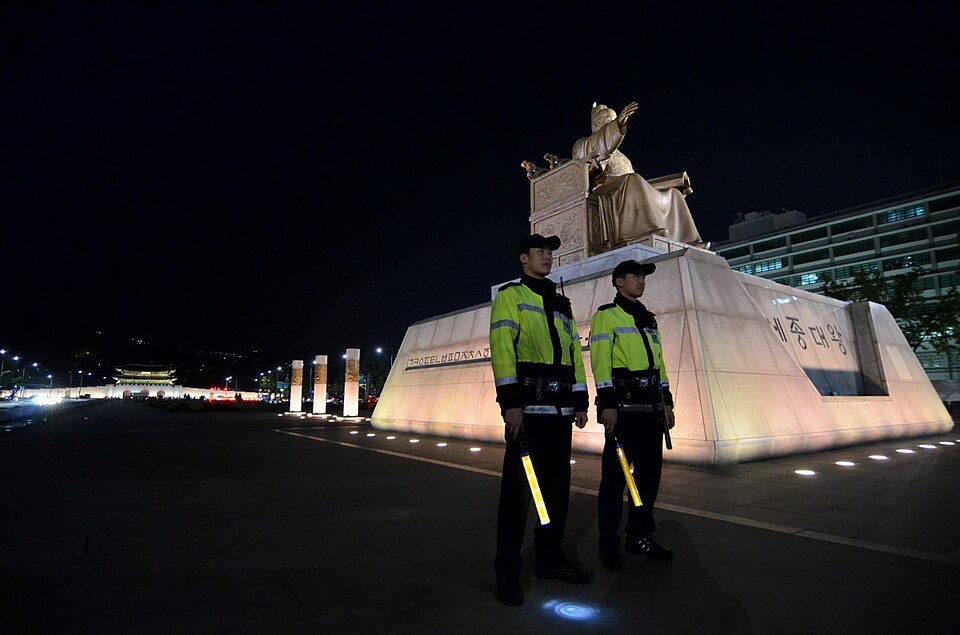
Who they were
The fourth king of Joseon, reigning 1418–1450, and the most revered ruler in Korean history. He assembled scholars in the Hall of Worthies (Jiphyeonjeon) to support his projects.
What they did
He created the Hangul alphabet — completed in 1443 and promulgated in 1446 with the Haerye commentary. With the inventor Jang Yeong-sil, his court produced a standardized rain gauge (1441, commonly credited as the world’s first), water clocks, and sundials. The agricultural handbook Nongsa jikseol adapted farming to Korean conditions, and court music was codified. His frontier policy of four counties and six garrisons fixed Korea’s approximate northern border, and in 1419, early in his reign, an expedition directed by the retired King Taejong — who still held military authority — struck the pirate base on Tsushima.
Legacy
Hangul above all. His portrait is on the 10,000-won note, and Sejong City and countless institutions carry his name.