Overview
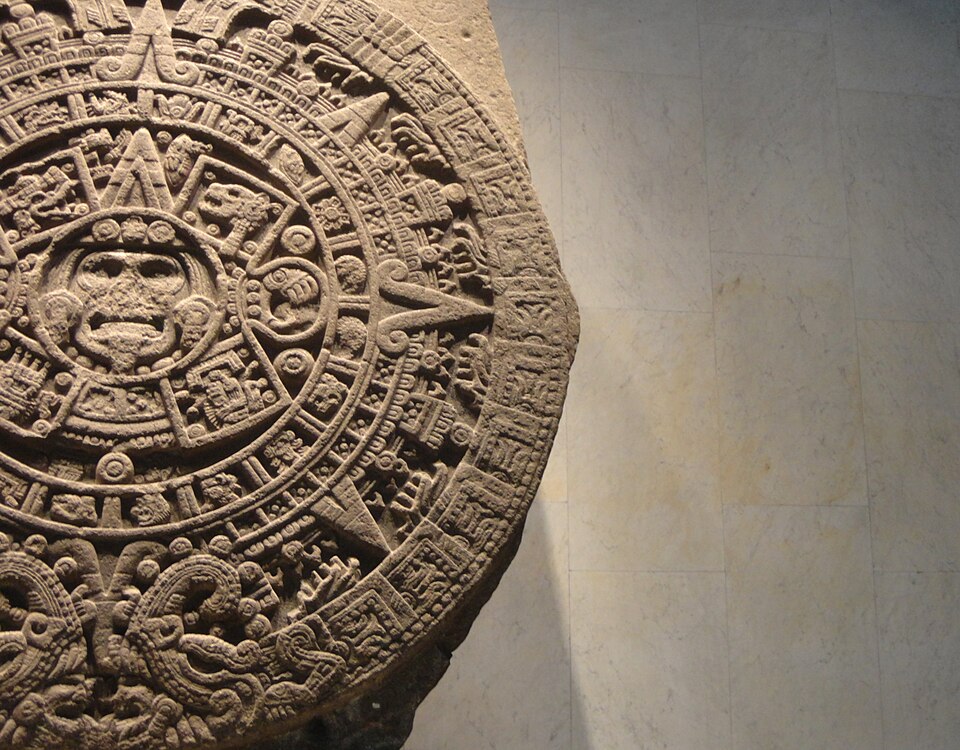
About 3.6 meters across and weighing some 24 tons, the stone is densely carved with calendrical and cosmological symbols around a central face. It is popularly called the Aztec calendar, though it is a monument rather than a working calendar.
Description
The central figure is usually read as the sun or the earth, ringed by the signs of the days and the ages of the world in Aztec belief. The carving compresses Aztec ideas of time, cosmos, and sacrifice into a single monument.
History and legacy
Carved near the end of independent Aztec rule, the stone was toppled and buried after 1521. Recovered in 1790, it is now a national symbol of Mexico and a centerpiece of the National Museum of Anthropology.