Overview
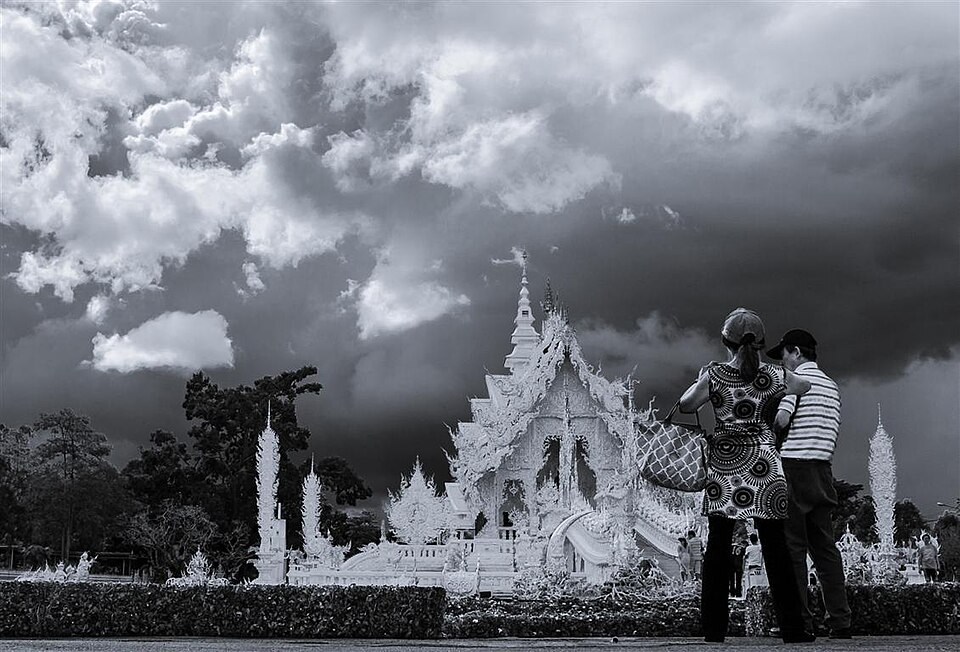
Chalermchai Kositpipat began it in 1997 on the site of a decayed local temple, paid for the work himself, and has treated the whole complex as one artwork still being made; about nine buildings are planned. Visitors reach the hall across a bridge over a field of outstretched hands — the reach of desire, left behind at the threshold. The white plaster and the mirrored glass set into it stand for the Buddha’s purity and for wisdom, and the one gold building on the site is the lavatory, because gold is for the things of this world. The murals inside put burning towers and film characters into the traditional cycle of rebirth.
Description
The buildings are brilliant white — a colour the artist associates with the Buddha’s purity — and their surfaces are inlaid with mirrored glass. The approach crosses a bridge over a field of sculpted reaching hands, staged as the passage from desire toward enlightenment. The murals of the ordination hall are known for mixing traditional Buddhist iconography with modern and pop-culture imagery.
History and legacy
The temple was damaged by the 2014 Chiang Rai earthquake but was repaired and reopened to the public. It has become one of Thailand’s most visited modern landmarks.