What happened
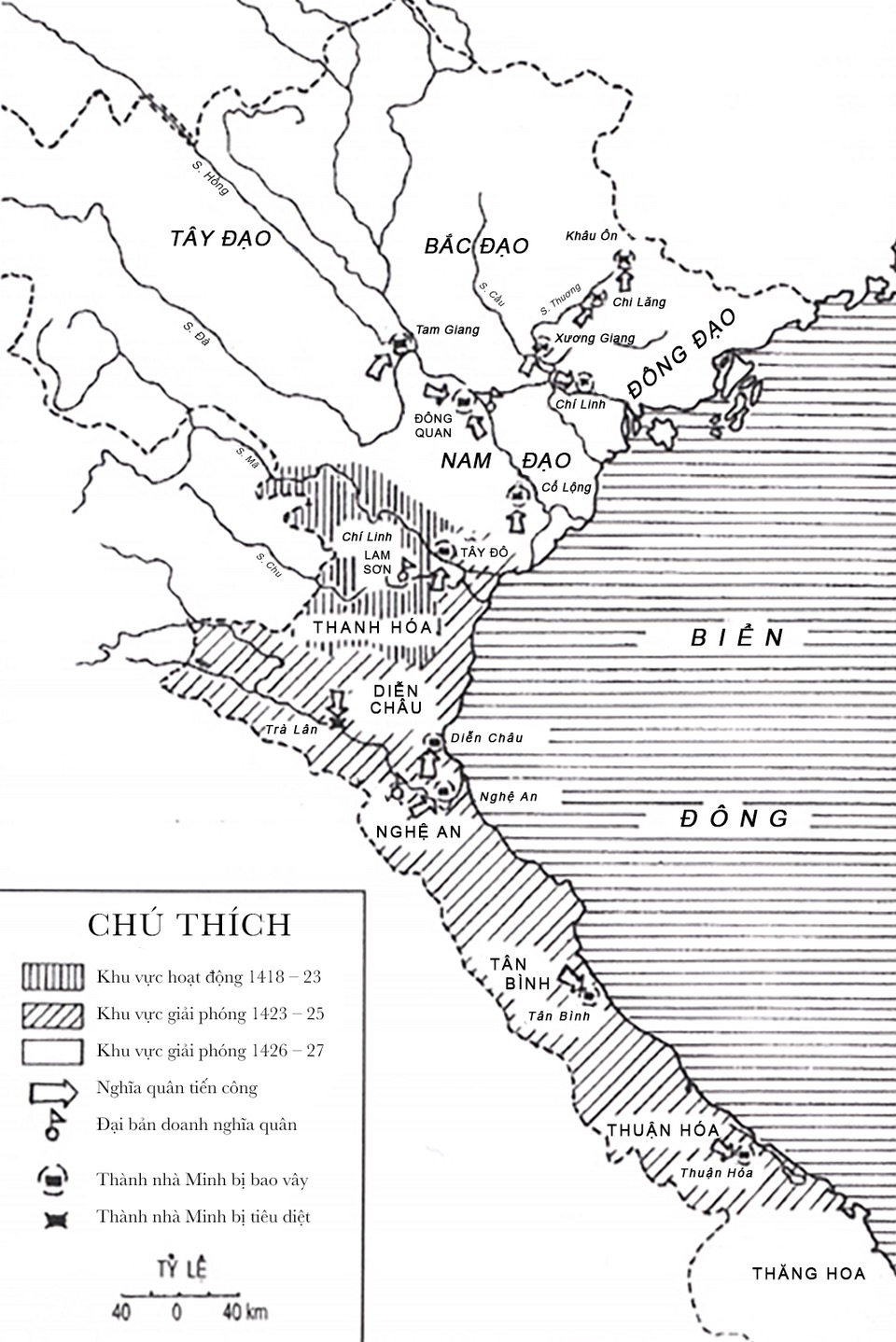
In 1418 Lê Lợi, a landowner from Thanh Hóa, rose against Ming rule at Lam Sơn. From guerrilla survival in the hills the movement grew into a national army, guided politically by the scholar-strategist Nguyễn Trãi, whose letters and proclamations sapped the will of the Ming garrisons.
Victory came at Chi Lang–Xuong Giang in 1427, where a Ming relief army was destroyed and its commander Liu Sheng was killed. The remaining garrisons were allowed to withdraw.
Background
Ming China had annexed Đại Việt in 1407. In documented Vietnamese complaints, the occupation is remembered for heavy taxation, cultural suppression, and the confiscation or destruction of Vietnamese books.
Consequences
Lê Lợi founded the Later Lê dynasty in 1428. Nguyễn Trãi’s victory proclamation, the Bình Ngô Đại Cáo, is remembered in Vietnam as a great declaration of independence.