Overview
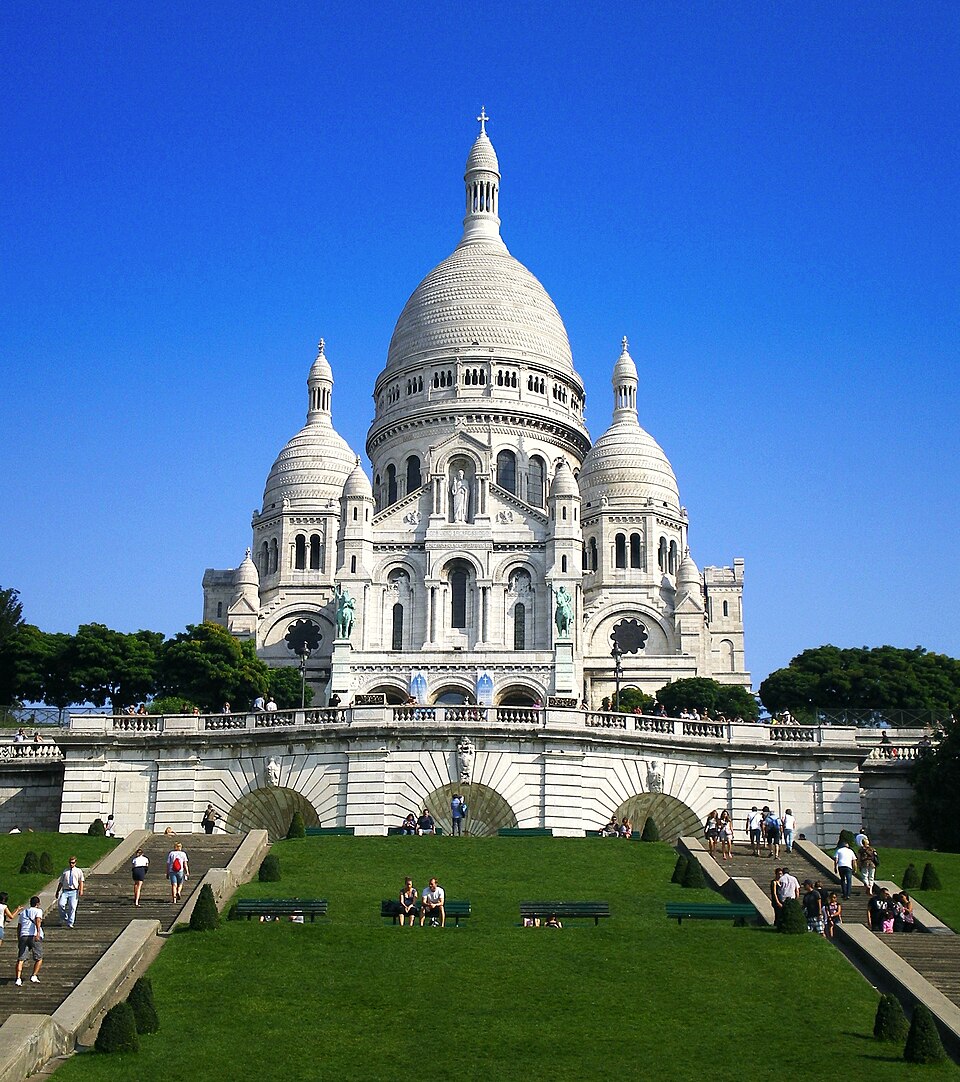
The hill kept its vineyards, windmills and cheap rents into the nineteenth century, which is why the painters came; two windmills and one working vineyard survive. Sacré-Cœur was built from 1875 as an act of national penance after the Franco-Prussian War, in a travertine that whitens with rain. Behind the basilica the lanes are still village-scaled, and the tourist crush thins within two streets.
Highlights
Take the funicular up and walk down. The steps in front of Sacré-Cœur are the free view over Paris; the dome climb adds height and the city’s second-best panorama. Place du Tertre is where the portrait painters work — crowded and priced accordingly; the Musée de Montmartre in Renoir’s old garden is the quiet alternative.