Overview
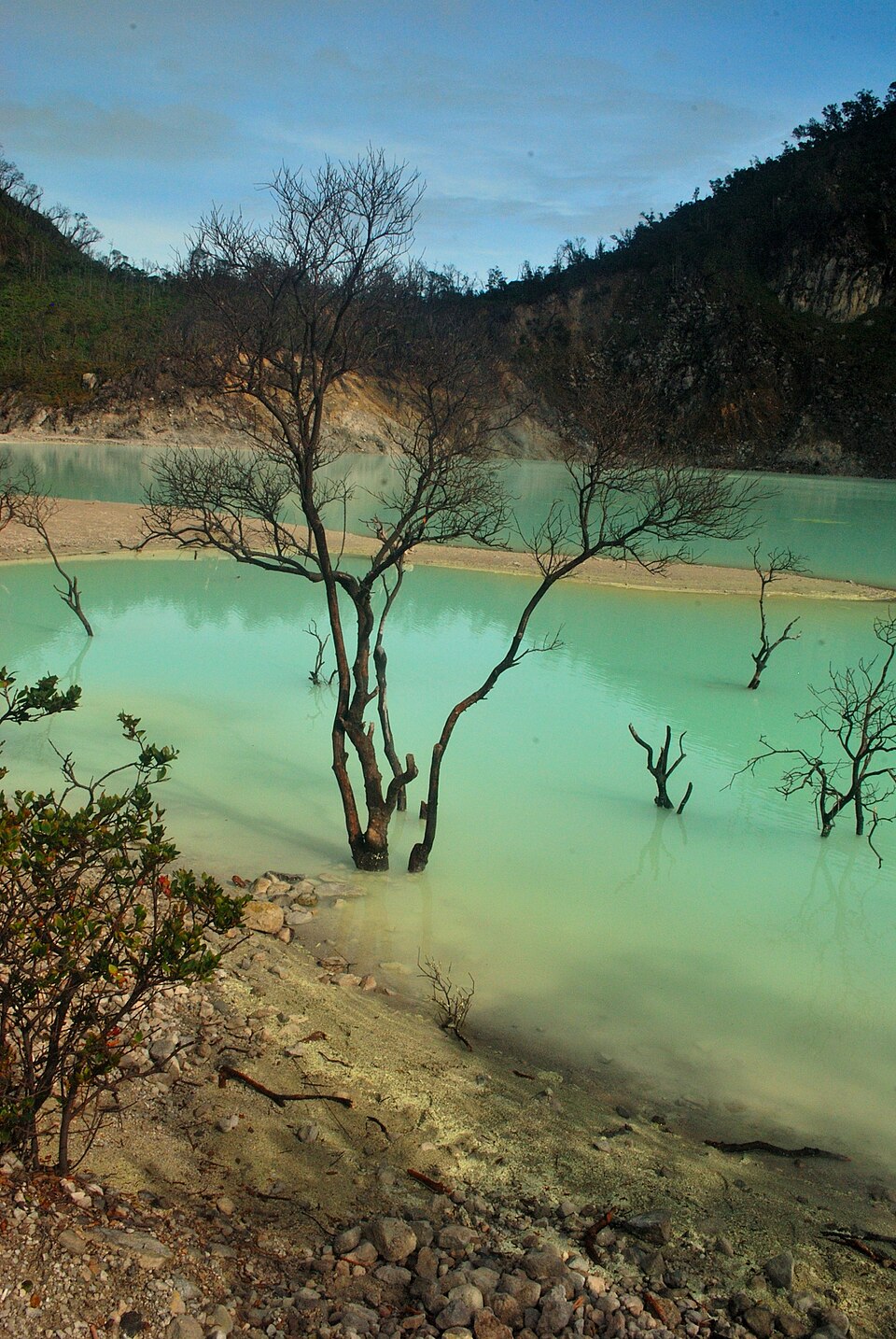
Local people avoided the crater for generations because birds flying over it died, which the Dutch naturalist Junghuhn investigated in 1837 and explained as volcanic gas rather than spirits. Sulphur was mined here into the twentieth century. The air at the water’s edge still carries hydrogen sulphide, so visits are time-limited by the rangers and anyone with a chest condition should stay on the upper terrace.
Highlights
Bring a mask — they are sold at the gate — and keep visits at the waterline short, which the staff will enforce. At 2,400 metres it is cold and often wet: fifteen degrees at midday is normal, and the white light after rain is when the lake looks best. It is about fifty kilometres from Bandung on a slow road, so treat it as most of a day.