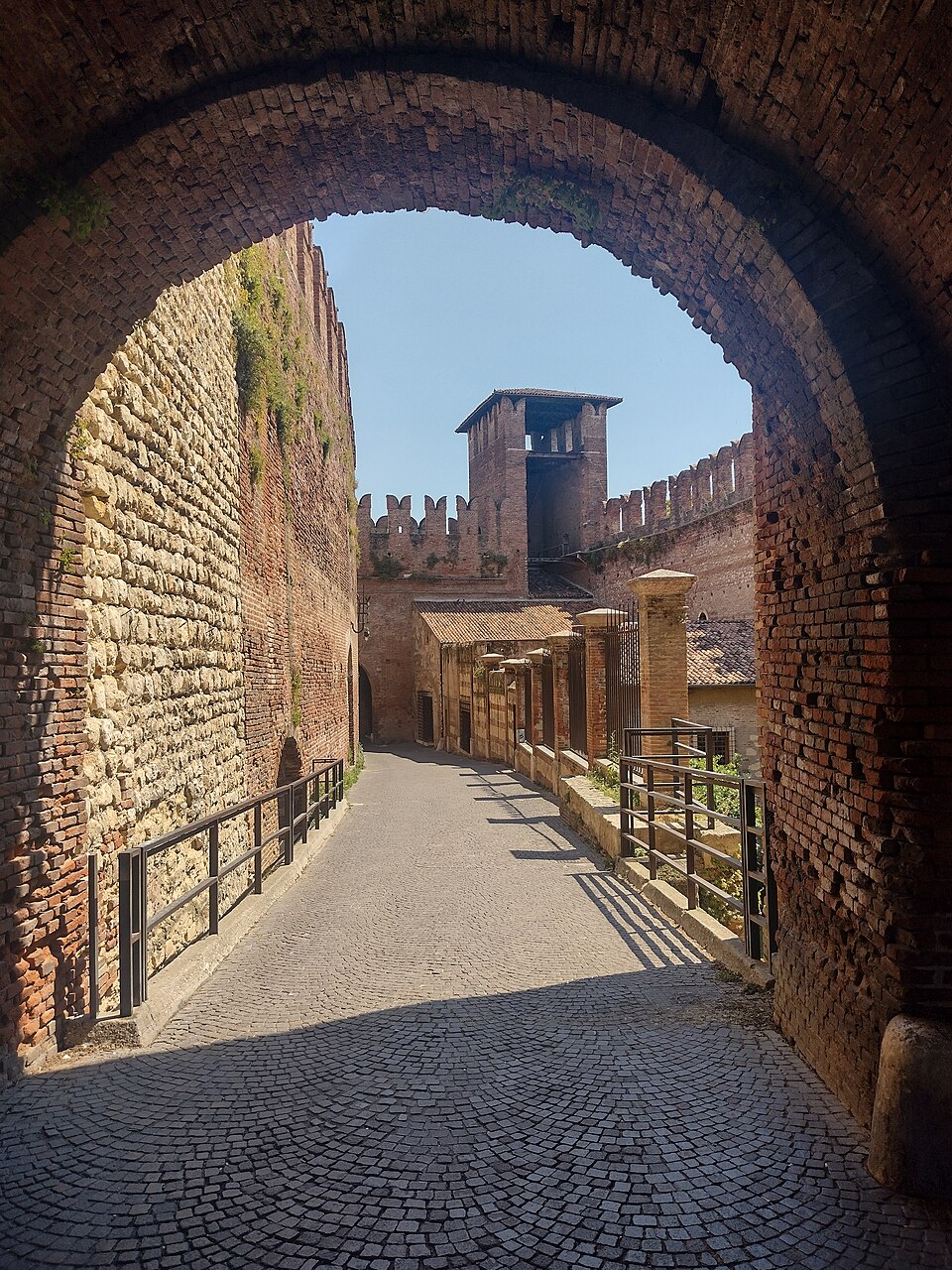
Overview
Cangrande II built it to hold the city and, if necessary, to escape it: the fortified bridge over the river was a private exit. Scarpa’s intervention left Roman, medieval, Napoleonic and Fascist-era work all visible and inserted concrete and steel to carry the sculpture, most famously the equestrian Cangrande I raised on a cantilevered slab in the open air. The collection is Veronese painting from the fourteenth to the eighteenth century.
Highlights
Follow Scarpa’s route rather than the shortest one; the sequence of levels and openings is the argument he is making. The Cangrande statue is best seen from the walkway below and again from above, which is exactly what the mounting is for. Walk out over the Scaliger bridge, rebuilt from the river after 1945 with its own recovered bricks.