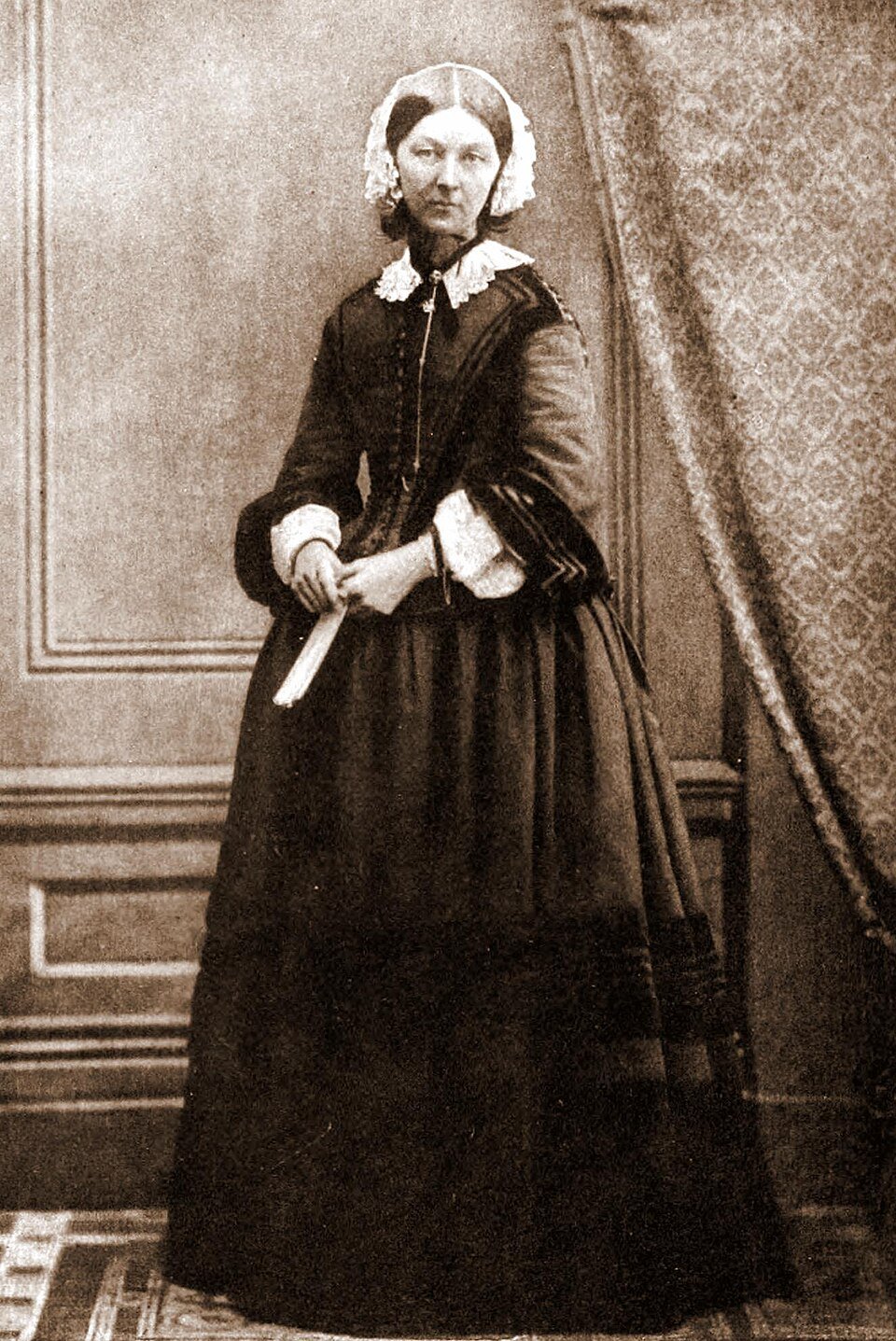
Who they were
Born into a wealthy family, Nightingale defied its expectations to train as a nurse. In 1854 she led a party of nurses to the British military hospital at Scutari during the Crimean War, where she imposed order and sanitation on catastrophic conditions and became famous through press reports as the Lady with the Lamp.
What they did
After the war she campaigned relentlessly for hospital and army medical reform, using statistics as her weapon — her polar-area diagrams showing deaths from preventable disease are landmarks of statistical graphics, and she was elected the first female member of the Royal Statistical Society. In 1860 she founded the Nightingale Training School at St Thomas’ Hospital, the model for professional nurse education, and her book Notes on Nursing spread her methods worldwide.
Legacy
Nightingale turned nursing into a trained, respected profession and hospital design and sanitation into matters of evidence. International Nurses Day is observed on her birthday, and the Nightingale Pledge and the Florence Nightingale Medal keep her name at the centre of the profession she created.