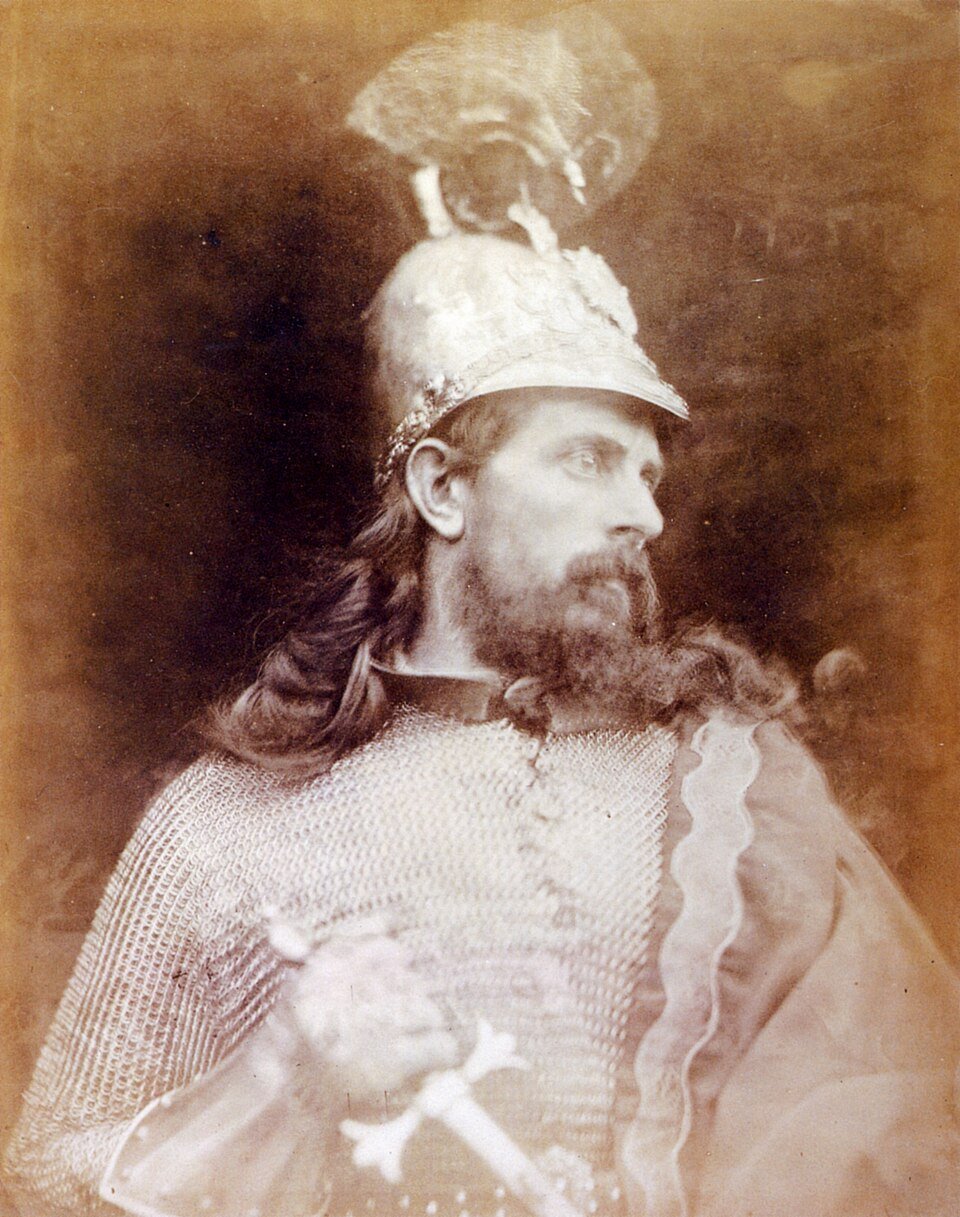
Who they were
There is no contemporary evidence for Arthur. A war-leader of that name is first mentioned in the ninth-century Historia Brittonum, and the full legend — Camelot, the Round Table, Merlin, the sword, the quest for the Holy Grail — was assembled by Geoffrey of Monmouth around 1136 and expanded by later French and English romancers, above all Malory’s Le Morte d’Arthur (1485).
What they did
Whether any real fifth- or sixth-century figure lies behind the tales is debated and unresolved; most historians treat Arthur as legend rather than a documented king.
Legacy
Arthur became one of the most enduring figures in Western storytelling, endlessly retold from medieval romance to modern film. He is remembered as a myth of ideal kingship, not as a historical ruler.