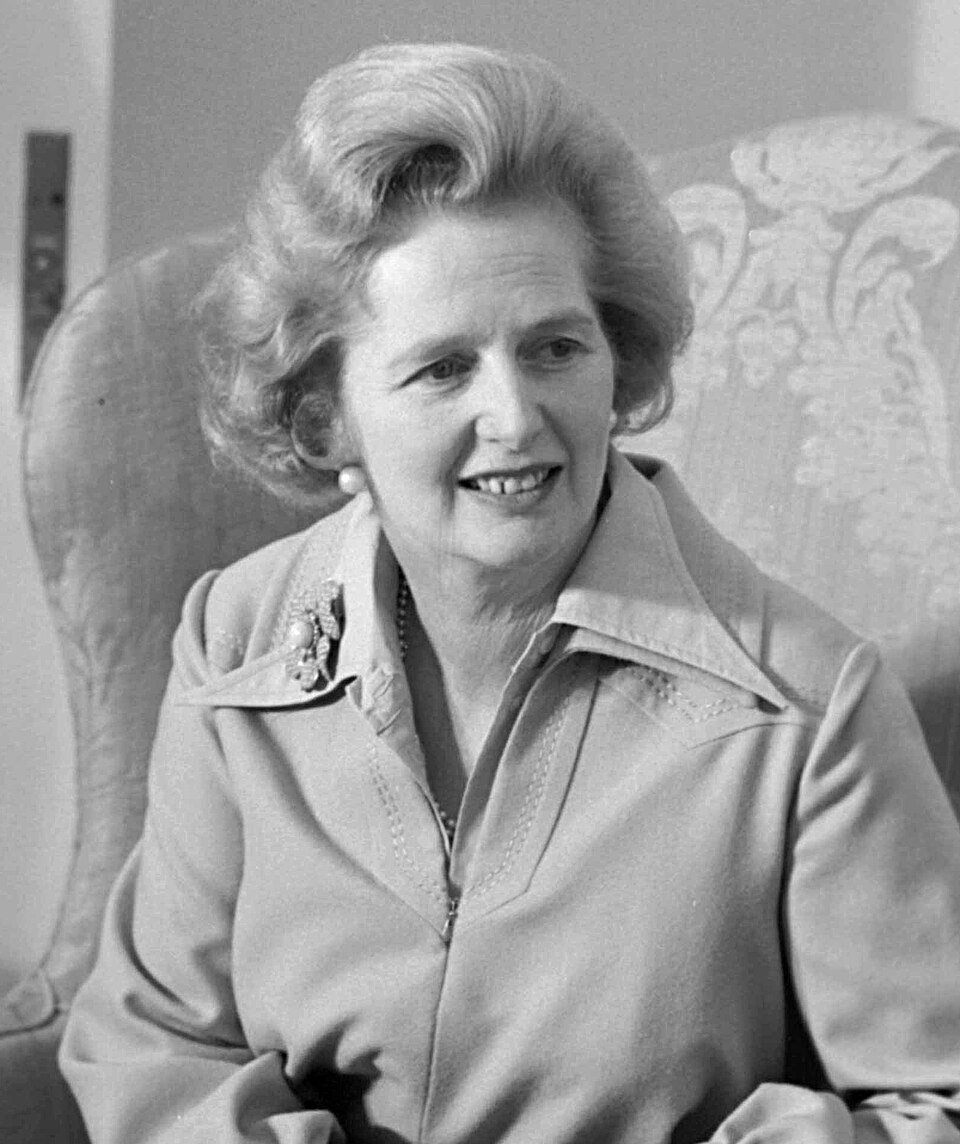
Who they were
A grocer’s daughter from Grantham who trained as a chemist and barrister, Thatcher entered Parliament in 1959, became Conservative leader in 1975 — the first woman to lead a major British party — and won the 1979 general election amid economic crisis, going on to win again in 1983 and 1987.
What they did
Her governments fought inflation with monetarist policy at the cost of steep early-1980s unemployment, privatized state industries including gas, telecoms and British Airways, sold council houses to their tenants, deregulated the City in the 1986 Big Bang, and curbed trade-union power, defeating the year-long miners’ strike of 1984–85. She led Britain to victory in the 1982 Falklands War, cultivated the Atlantic alliance with Ronald Reagan while engaging Gorbachev, and secured the 1984 EU budget rebate; the Anglo-Irish Agreement of 1985 and the 1990 reunification of Germany also fell within her term. The poll tax provoked riots in 1990, and after a leadership challenge in her own party she resigned in November that year.
Legacy
Assessments divide sharply and durably. Admirers credit her with reversing national decline, taming inflation and union militancy, and restoring Britain’s international standing; critics hold her responsible for the destruction of industrial communities, widened inequality and a harsher public culture. Both camps agree on her scale: Thatcherism named an era, and subsequent governments of both parties operated largely within the settlement she made.