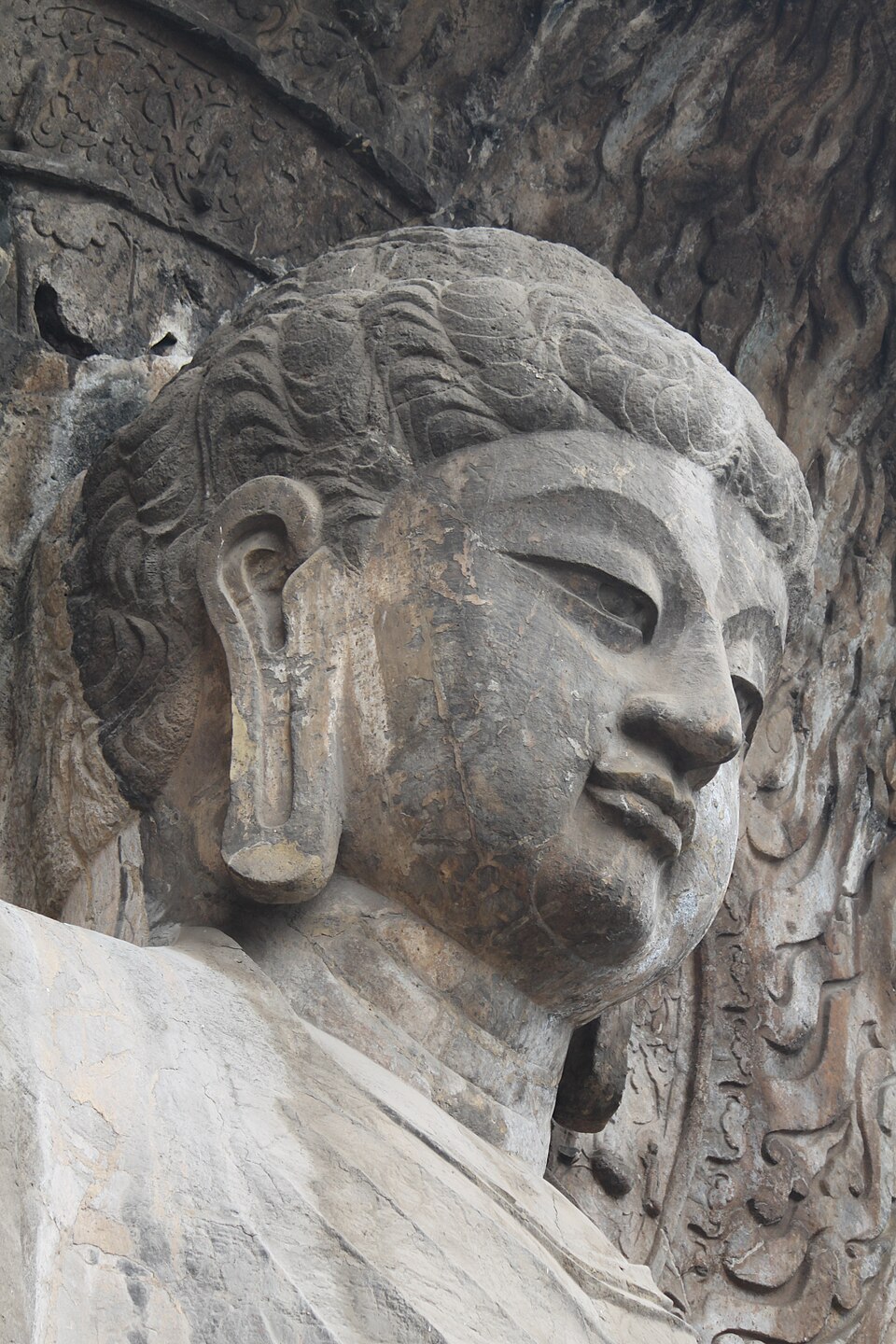
Overview
The grottoes are carved into the limestone cliffs on both banks of the Yi River south of Luoyang in Henan. Carving began in 493, when Emperor Xiaowen of the Northern Wei moved his capital to Luoyang, and reached its peak under the Tang in the 7th and 8th centuries.
Description
More than 2,300 caves and niches contain some 100,000 statues. The largest ensemble, Fengxian Temple, centres on a 17-metre seated Vairocana Buddha completed in 675, and an inscription records that Empress Wu Zetian contributed funds to the project.
History and legacy
Carved from the Northern Wei into the 8th century, the statues of Longmen document the transition from the blockier Northern Wei style to the fuller, more naturalistic manner of the Tang, making the site a touchstone for the history of Chinese Buddhist sculpture. It was inscribed as a UNESCO World Heritage Site in 2000.