Overview
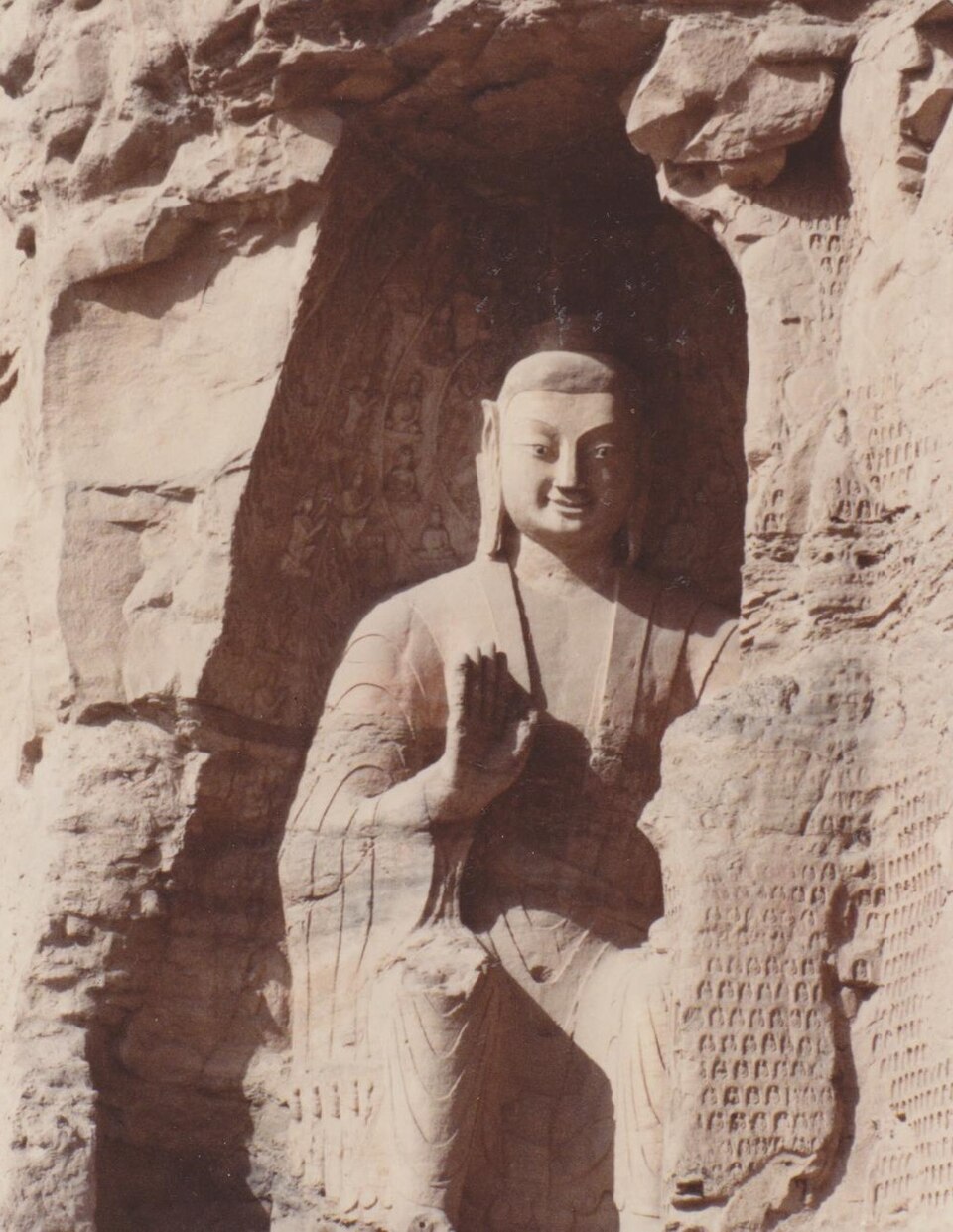
The grottoes were cut into a sandstone cliff near Datong in Shanxi, the early capital of the Northern Wei, with the main phase of carving running from about 460 to about 525. The earliest and most famous group, the five Tanyao caves, was begun by the monk Tanyao under the patronage of the Northern Wei court, each cave housing a colossal Buddha associated with an emperor of the dynasty.
Description
About 45 major caves contain more than 51,000 statues, the tallest standing around 17 metres. Their style blends Indian and Central Asian models with Chinese elements.
History and legacy
Yungang marks the first imperial-scale Buddhist stone carving in China and directly precedes the Longmen Grottoes: when the Northern Wei capital moved to Luoyang in 493, carving activity shifted there. The site was inscribed as a UNESCO World Heritage Site in 2001.