Overview
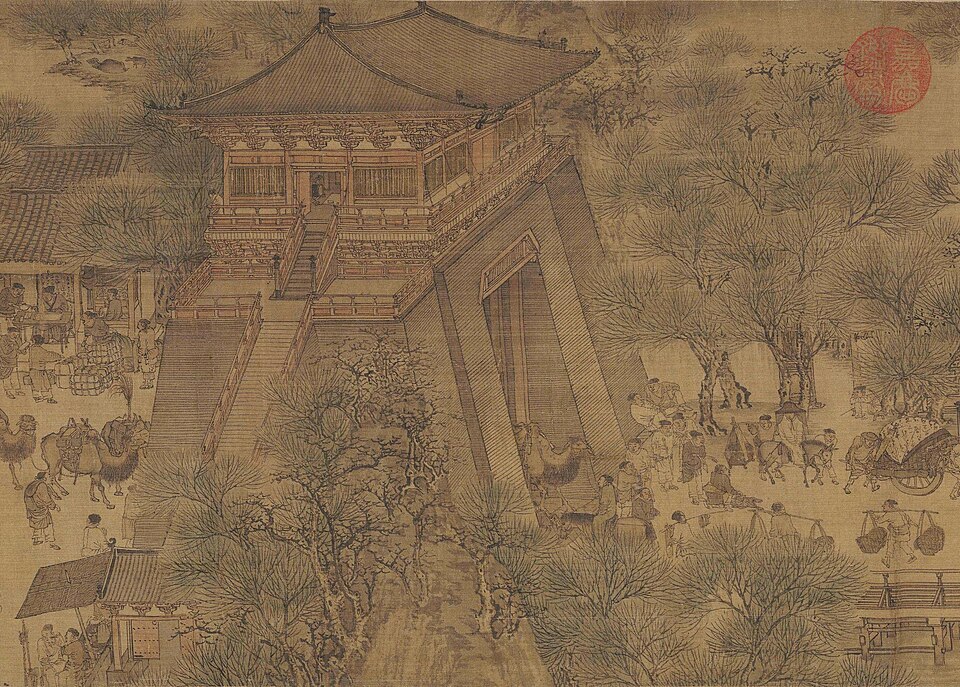
The handscroll is attributed to Zhang Zeduan, a court painter of the Northern Song, and is believed to have been painted in the early 12th century. It unrolls as a single panorama of daily life along the Bian River in the capital Bianjing, modern Kaifeng. Whether it literally depicts the day of the Qingming festival, and how far it idealizes the city, is still debated among scholars.
Description
About 25 cm tall and over 5 metres long, the scroll is packed with more than 800 figures alongside boats, bridges, shops and carts. As it unrolls, the scene moves from the outskirts toward the heart of the city, reaching its climax at the crowded Rainbow Bridge, where boats and onlookers press together.
History and legacy
The original is held by the Palace Museum in Beijing and is often called China’s most famous painting. It inspired many later versions and reworkings, the best known being a Qing court version completed in 1736.