Overview
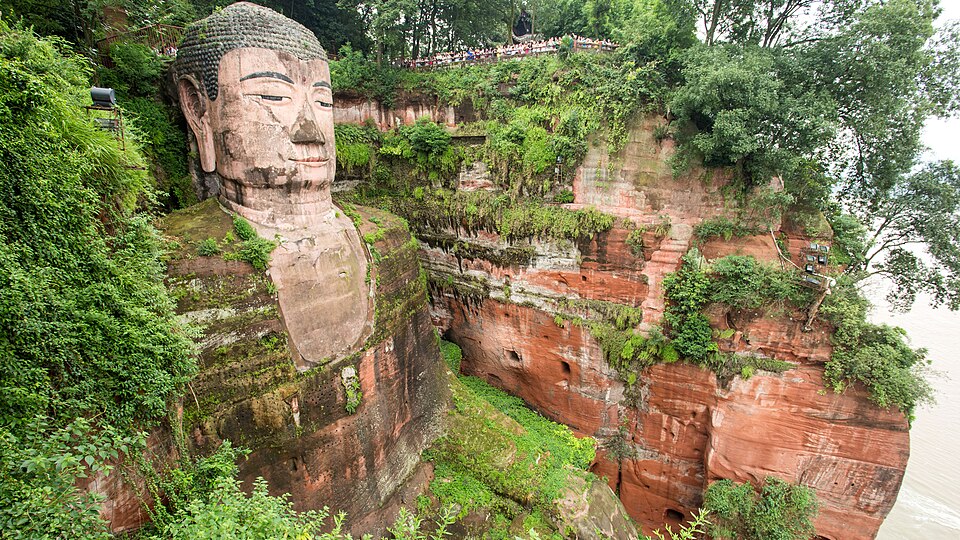
The scale is the point: 71 metres from the crown of the head to the feet, shoulders 28 metres across, and toenails a person can stand on. For most of its life the figure was not out in the weather — a wooden pavilion of thirteen storeys sheltered it until the Mongol wars burned that away, and the stone has been bare since. Modern air has done what thirteen centuries of rain did not: soot and acid rain have blackened the face and eaten at the sandstone, and the Buddha has been through repeated restorations, the most recent in 2018 and 2019.
Description
The seated figure is hewn directly from the cliff and gazes down over the meeting of the three rivers. A hidden drainage system carved into the figure has helped preserve it over the centuries.
History and legacy
Work was begun in 713 by the monk Haitong, who hoped the Buddha’s presence would calm the treacherous waters that wrecked shipping at the confluence; according to tradition, he gouged out his own eyes to prove his sincerity when funding was threatened. After Haitong’s death the project stalled, and it was completed in 803 with funding from the regional military governor Wei Gao; in 1996 it was inscribed as a UNESCO World Heritage Site together with Mount Emei.