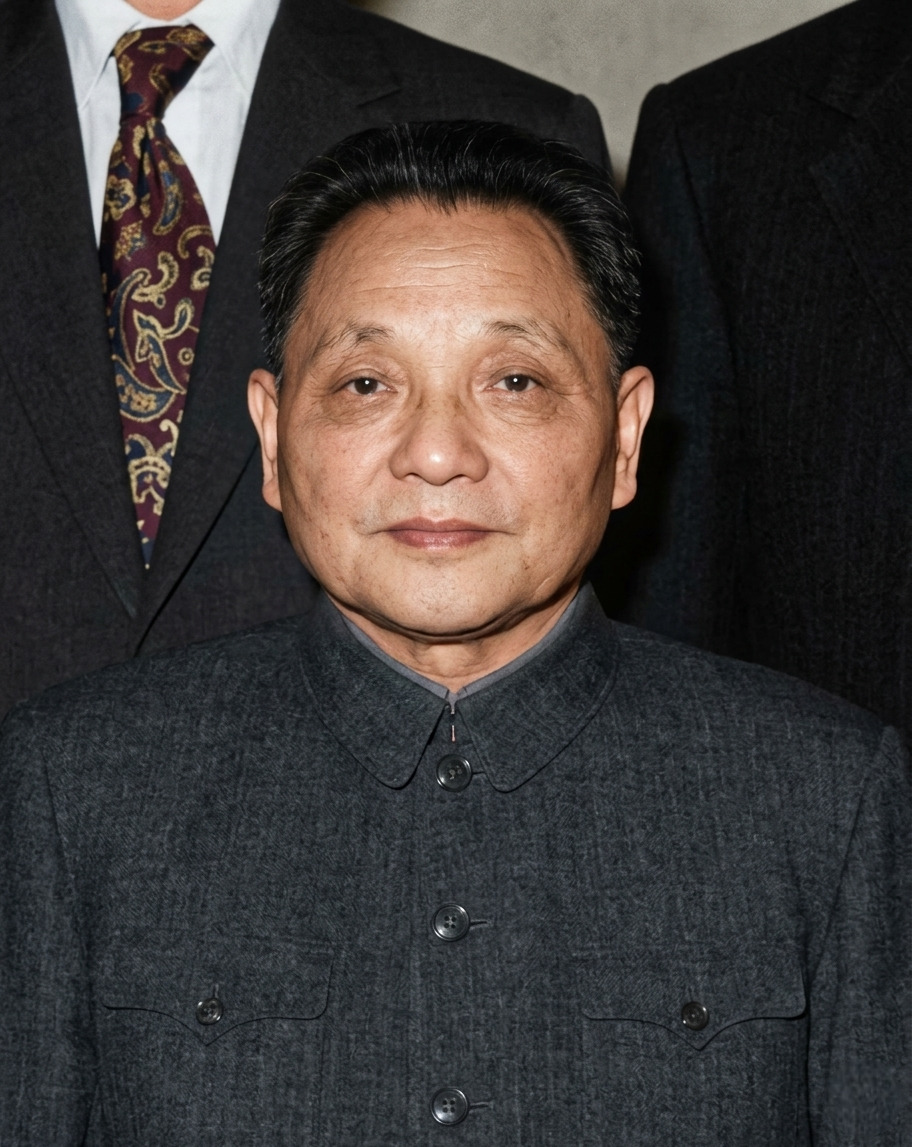
Who they were
He joined the party during work-study in France, marched on the Long March, and served as political commissar of the Second Field Army in the civil war. He was purged twice during the Cultural Revolution, returned after 1976, and from the Third Plenum of December 1978 was paramount leader without holding the top party or state posts.
What they did
He launched reform and opening-up: rural de-collectivization through the household responsibility system, special economic zones such as Shenzhen, and foreign investment and trade — summed up as “socialism with Chinese characteristics”, and by his pragmatic cat aphorism: black or white, it need only catch mice. He negotiated the Hong Kong framework — the Sino-British Joint Declaration of 1984 and “one country, two systems”. In 1989, pro-democracy protests centered on Tiananmen Square were suppressed by the army on June 3–4 under martial law that Deng, as paramount leader, approved; estimates of the death toll vary. His 1992 southern tour re-accelerated reform. He died in February 1997, months before the Hong Kong handover.
Legacy
The reform era he began transformed China’s economy and daily life.