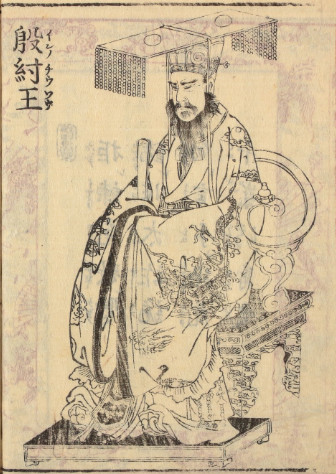
Who they were
Di Xin, the last king of Shang, is remembered by the name King Zhou (紂). Later accounts, notably the Shiji, made him the archetypal tyrant of Chinese tradition.
What they did
Those accounts describe extravagance — a “pool of wine and forest of meat” enjoyed with his consort Daji — cruel punishments such as the burning pillar, and the killing of his uncle Bigan for daring to remonstrate. Defeated by King Wu of Zhou at the Battle of Muye (c. 1046 BC), he died in his burning palace at the capital Yin. Some modern historians argue, however, that this tyrant image was heavily embellished by the Zhou victors and later moralists.
Legacy
King Zhou became the byword for misrule: the ruler whose wickedness justified the “Mandate of Heaven” passing to a new dynasty.