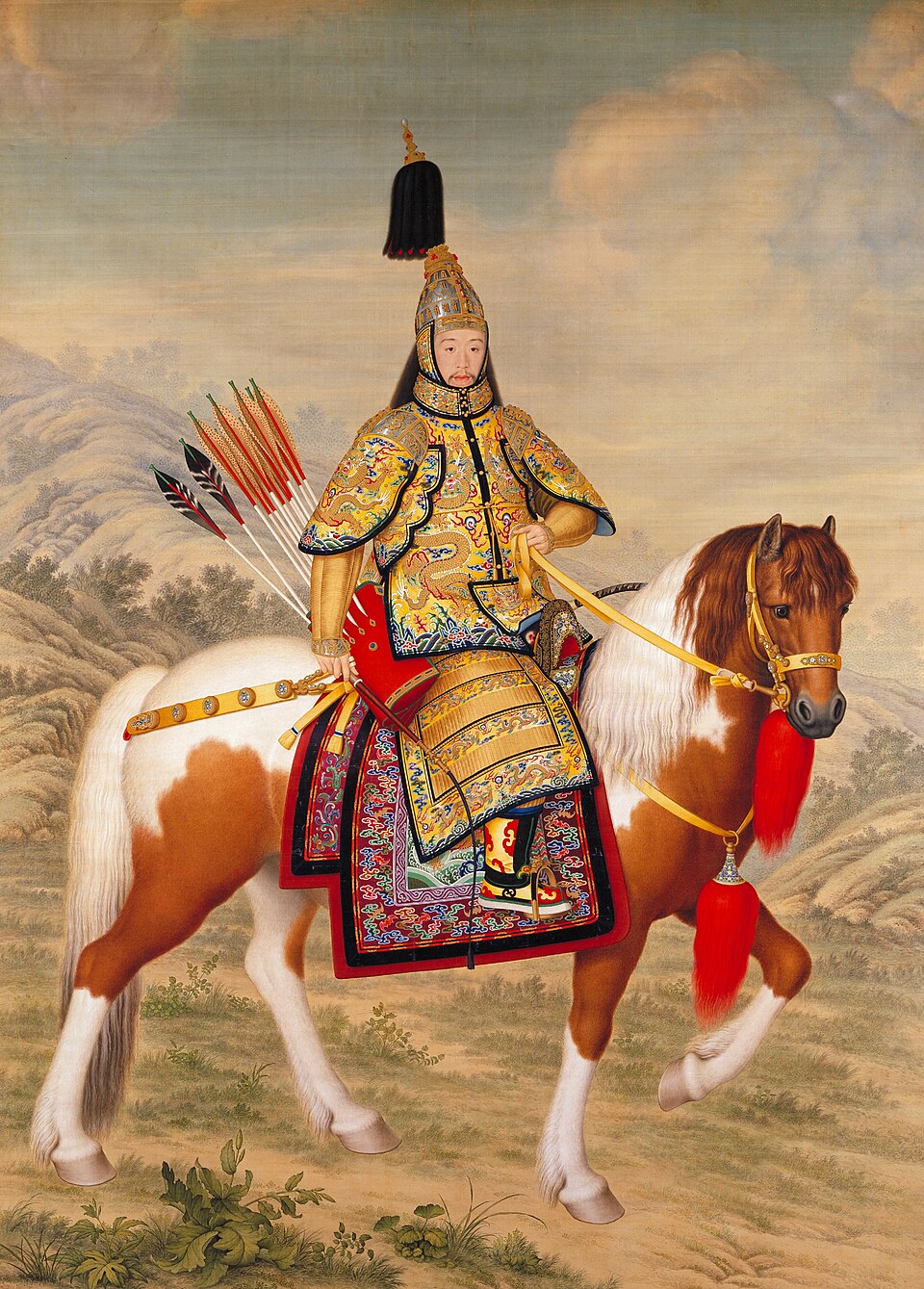
Who they were
Hongli, fourth Qing emperor at Beijing. He abdicated in 1796 after a full sixty years so as not to outreign his grandfather Kangxi, but as retired emperor kept real power until he died in 1799.
What they did
He styled his conquests the “Ten Great Campaigns”: the Dzungar state was destroyed in the 1750s and the Tarim Basin incorporated in 1759 as the “new territory”, Xinjiang, bringing the empire to its widest reach. He commissioned the Complete Library of the Four Treasuries (Siku Quanshu, some 36,000 volumes), compiled alongside a literary inquisition that censored or destroyed works deemed anti-Manchu; he was also a prolific poet and art collector. In 1793 he received Britain’s Macartney embassy and rebuffed its trade demands. Late in the reign his corrupt favorite Heshen amassed a vast fortune, and the White Lotus rebellion began in 1796.
Legacy
High Qing splendor at maximum extent — and the strains that opened the 19th-century crisis.