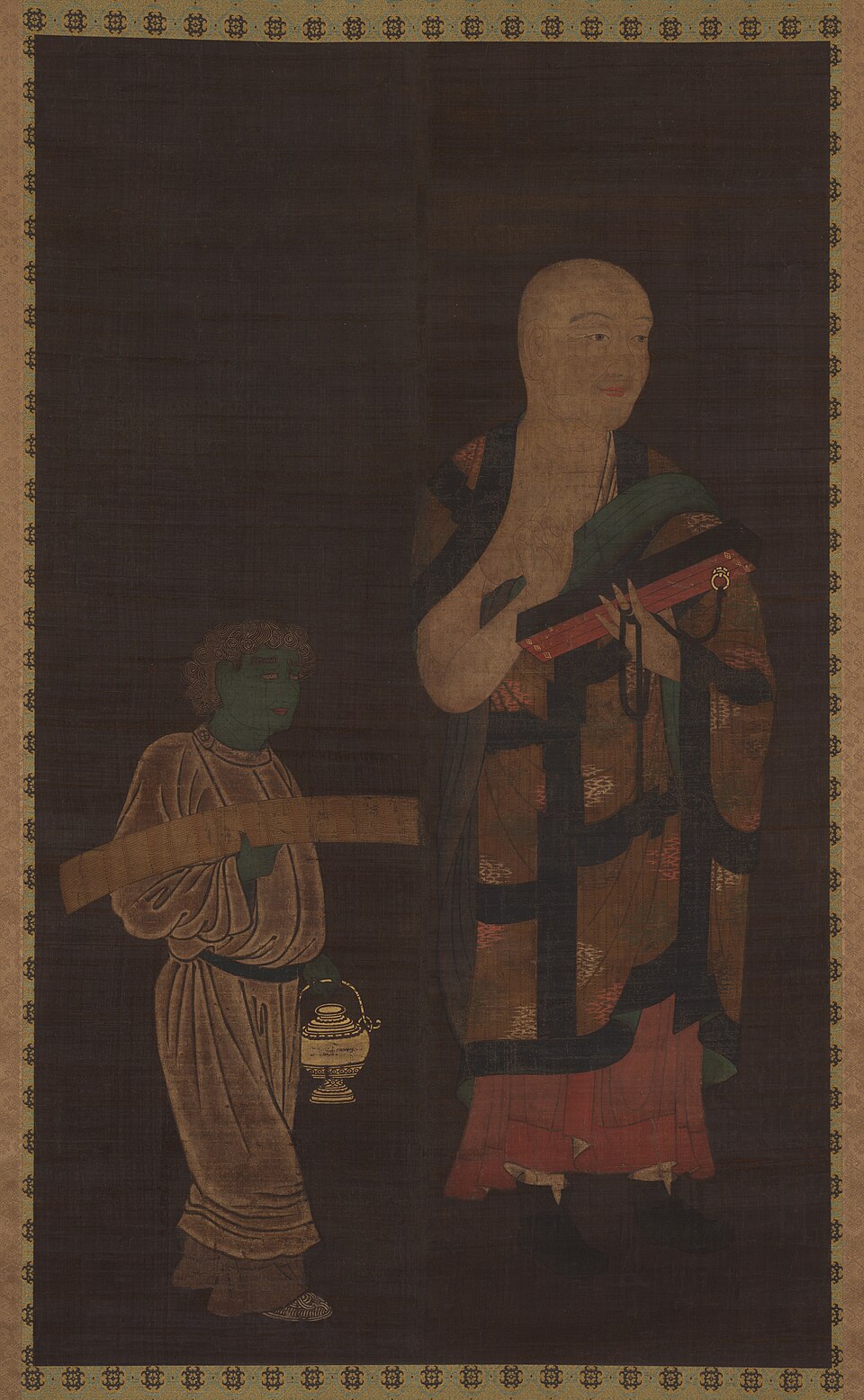
Who they were
A Tang Buddhist monk, translator and traveler, driven by the search for authentic scriptures.
What they did
Tradition dates his departure for India to 629 — border crossings were then forbidden, making it illegal. He traveled via Central Asia to the great monastery of Nalanda and studied under the master Śīlabhadra. Returning in 645 with 657 texts to a hero’s welcome from Emperor Taizong, he led a state translation enterprise that rendered 74 works into Chinese — including the canonical Heart Sutra and the vast Perfection of Wisdom corpus — and founded the Faxiang (Yogacara) school. His Great Tang Records on the Western Regions is a prime source for 7th-century Central and South Asia; the Big Wild Goose Pagoda in Xi’an was built to house his scriptures.
Legacy
The Ming novel Journey to the West reimagined him as Tripitaka, escorted by the Monkey King — fiction built on his real journey.