Overview
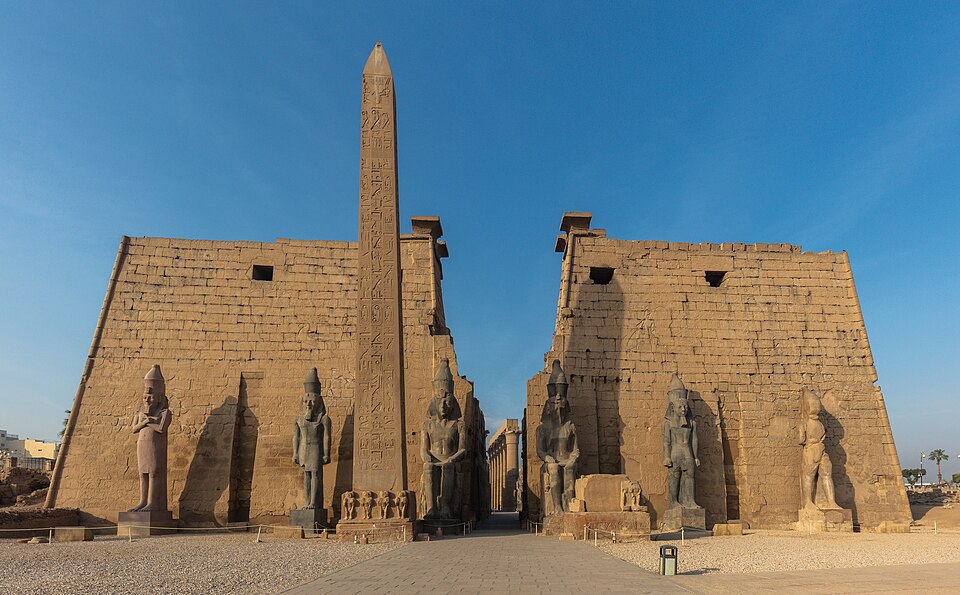
Luxor Temple stands in the heart of the modern city of Luxor, ancient Thebes, and was dedicated to the god Amun. It was built mainly by Amenhotep III around 1400 BC, including the great colonnade, and completed around 1250 BC by Ramesses II, who added the entrance pylon and colossal statues.
Description
Of the twin obelisks that once flanked the entrance, one remains in place, while the other has stood on the Place de la Concorde in Paris since it was moved there in 1836. The temple was the goal of the annual Opet festival, when the image of Amun travelled from Karnak along the avenue of sphinxes.
History and legacy
Sacred use of the site never fully ceased: a Roman legionary shrine later occupied the temple, and the mosque of Abu al-Haggag still stands on top of its columns. In 1979 it was inscribed on the UNESCO World Heritage List as part of Ancient Thebes.