What happened
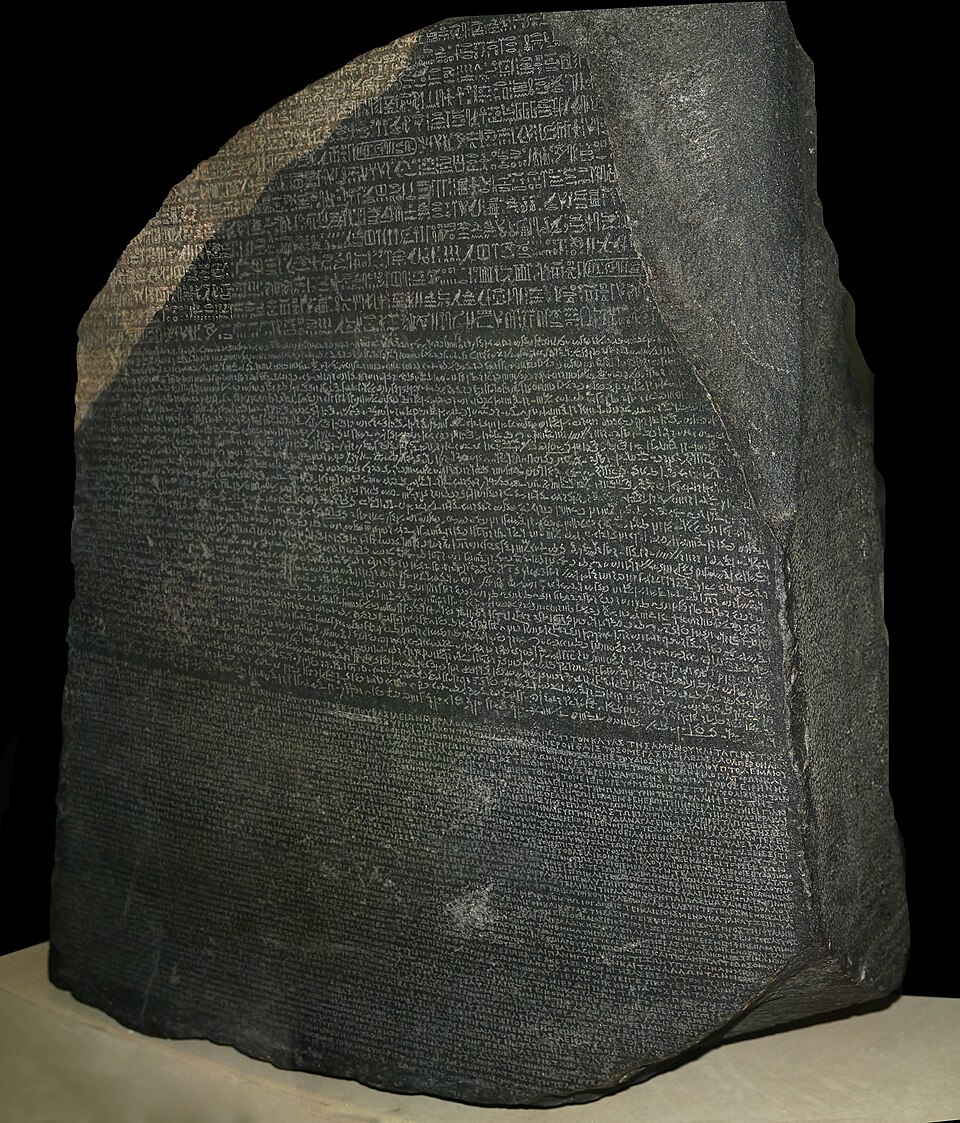
In July 1799, French soldiers rebuilding Fort Julien near Rashid (Rosetta) in the Nile Delta uncovered a granodiorite stele, and the officer Pierre-François Bouchard recognized its importance. The stone carries the same decree — issued at Memphis in 196 BC for King Ptolemy V — in three scripts: Egyptian hieroglyphs, Demotic, and ancient Greek.
Background
Knowledge of hieroglyphs had been lost since late antiquity. What scholars needed as a key was a bilingual text pairing the unknown script with a known language — and this stone provided exactly that.
Consequences
After the French defeat, the stone passed to Britain under the 1801 Treaty of Alexandria and has been displayed in the British Museum since 1802. The English polymath Thomas Young made early advances on the Demotic text and the royal cartouches, and the French scholar Jean-François Champollion announced the decipherment of hieroglyphs in 1822, founding Egyptology as a discipline. Egypt has formally and publicly requested the stone’s return, and repatriation remains debated.