What happened
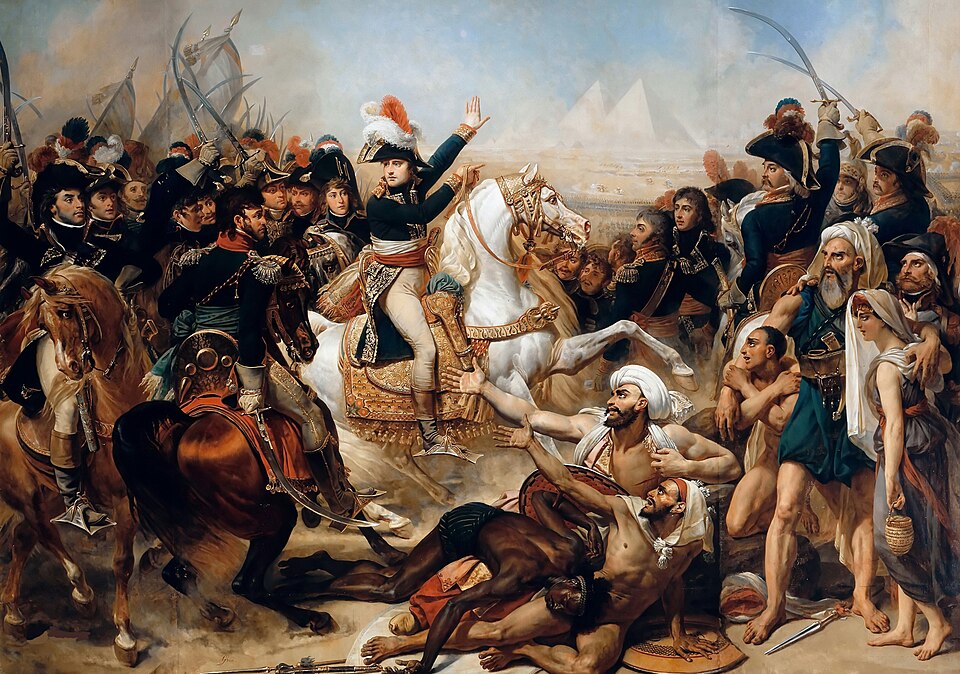
In July 1798 Napoleon Bonaparte landed near Alexandria with about 35,000 troops. At the Battle of the Pyramids on 21 July, French squares crushed the mamluk cavalry near Cairo, but on 1 August Nelson’s British fleet destroyed the French fleet at Aboukir Bay — the Battle of the Nile — stranding the army in Egypt. Uprisings in Cairo were harshly suppressed, and a campaign into Syria failed at Acre in 1799. Napoleon slipped back to France in August 1799, soon seizing power in a coup, and the army he left behind capitulated to British-Ottoman forces in 1801.
Background
The expedition aimed to strike at Britain’s route to India and to win glory for revolutionary France. Napoleon also brought along 167 scholars and scientists — the savants — to study Egypt thoroughly.
Consequences
The savants’ work produced the monumental Description de l’Égypte and effectively founded modern Egyptology; soldiers found the Rosetta Stone in 1799. The campaign also exposed the weakness of mamluk-Ottoman Egypt, stimulated European imperial interest in the region, and opened the power vacuum from which Muhammad Ali rose in 1805.