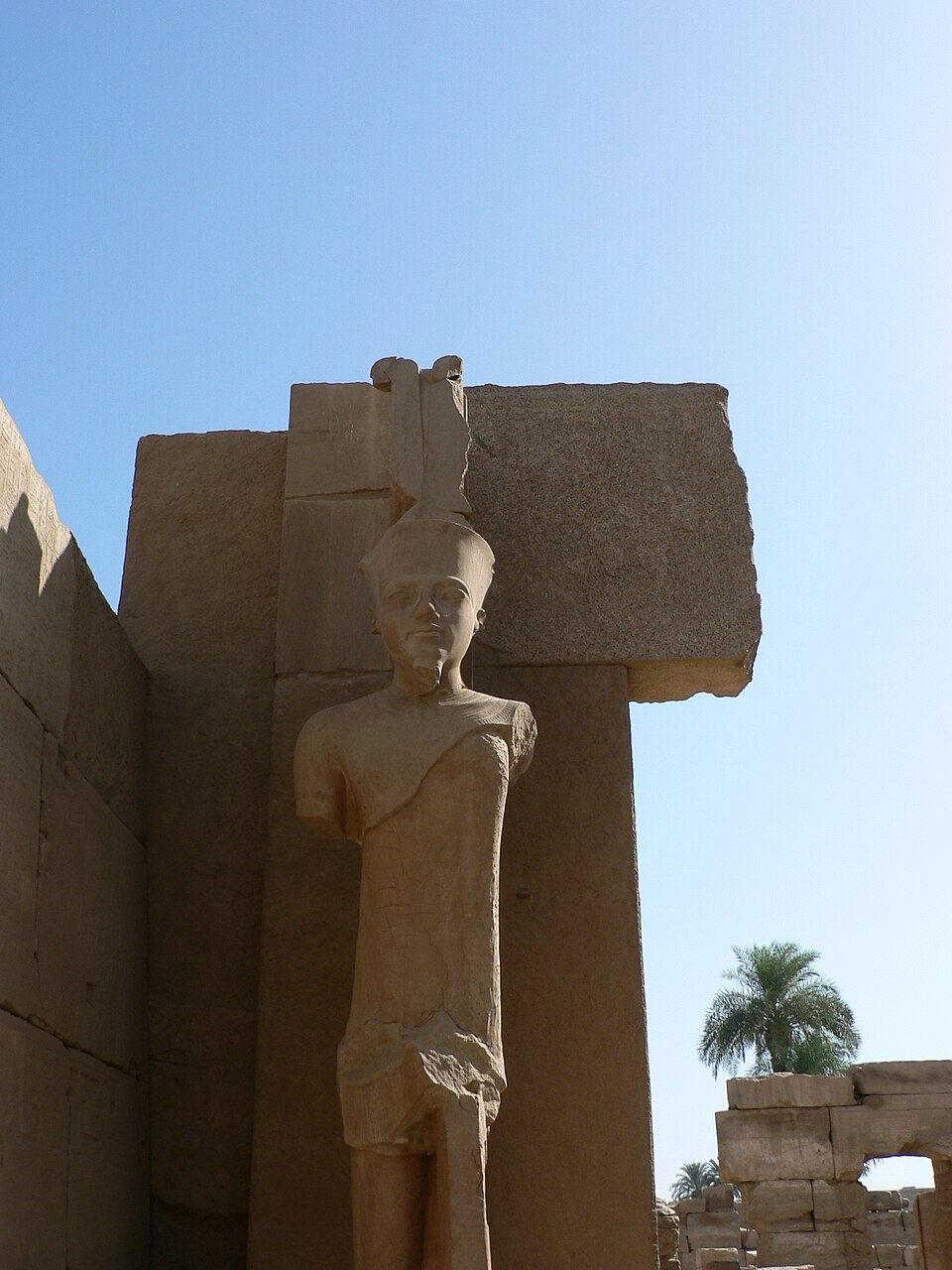
Who they were
Tutankhamun (c. 1341–c. 1323 BC) was an 18th Dynasty king who came to the throne as a child of about nine and reigned c. 1332–c. 1323 BC. A 2010 DNA study indicates he was most likely a son of Akhenaten. He married his half-sister Ankhesenamun and died at about 19.
What they did
Born Tutankhaten, he abandoned Amarna, restored the cult of Amun and the old religion — as recorded on the Restoration Stele — and changed his name to Tutankhamun. The cause of his death is debated: CT and DNA studies from 2005–2010 point to a leg fracture compounded by malaria, but the question remains discussed.
Legacy
Historically a minor king, he became world-famous because his tomb, KV62 in the Valley of the Kings, was found nearly intact in 1922 by Howard Carter. His gold funerary mask, weighing about 10 kg, is among the most recognizable artifacts from the ancient world. His treasures remain in Egypt: the collection is on display at the Grand Egyptian Museum near Giza, which opened in November 2025.