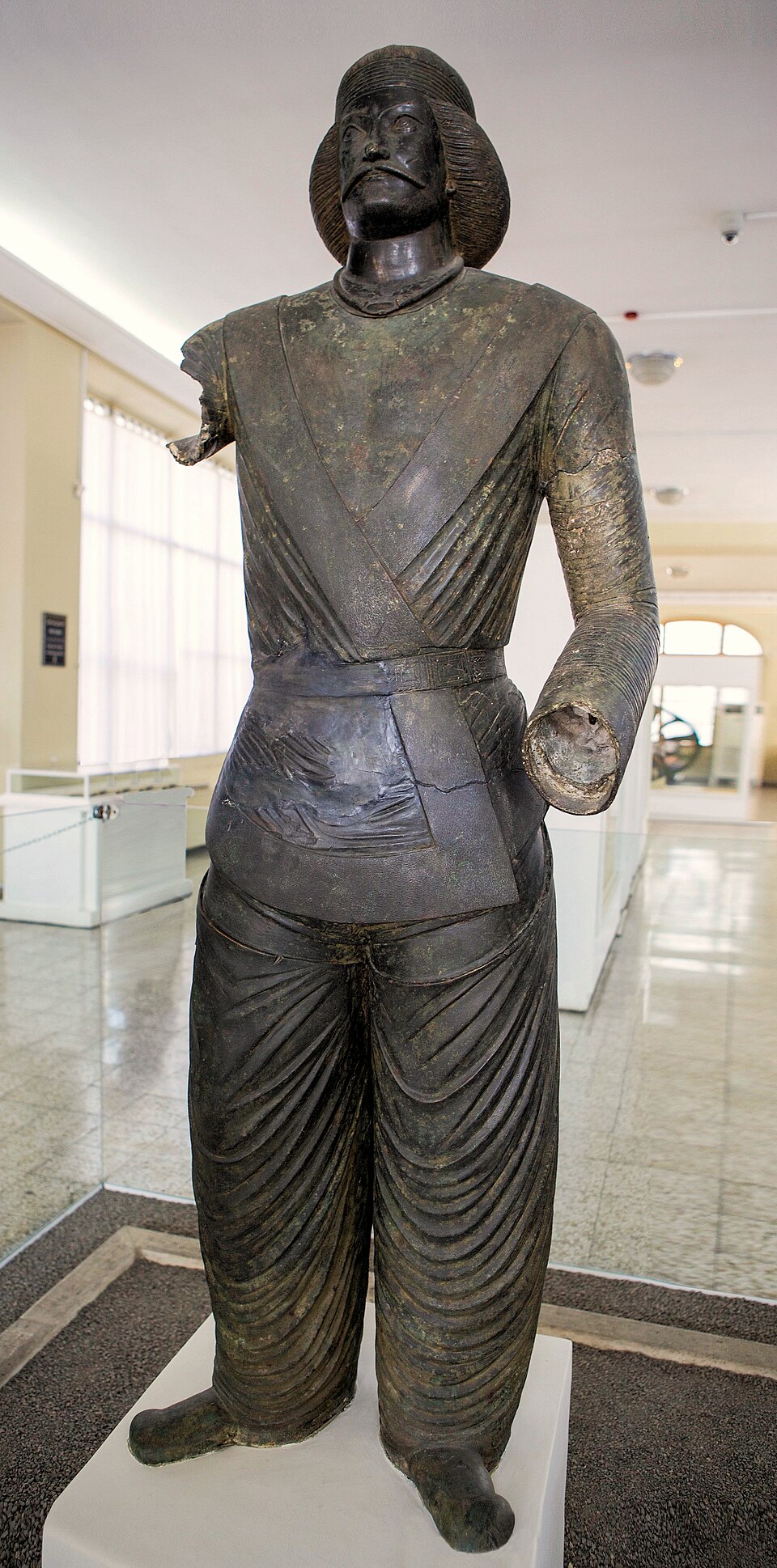
Overview
The Parthian Empire was founded around 247 BC by Arsaces I, chief of the Parni, whose line ruled as the Arsacid dynasty. Under Mithridates I in the mid-2nd century BC, Parthia took Media, Mesopotamia, and the Seleucid east, restoring an Iranian great power. It was a decentralized, feudal-style empire of vassal kingdoms and great noble houses, with capitals at Nisa and later Ctesiphon on the Tigris.
Key developments
Parthia’s military system became famous: armored heavy cavalry (cataphracts) and horse archers, whose maneuver of firing backward at full gallop — the Parthian shot — became proverbial. As Rome’s great eastern rival, Parthia annihilated Crassus’s legions at Carrhae in 53 BC; the captured legionary standards were returned by treaty under Augustus in 20 BC, and centuries of war and truce over Armenia and Mesopotamia followed. The empire also controlled the Silk Road trade between Han China and Rome, growing rich as middlemen — the Han knew Parthia as Anxi. In culture, Hellenism gradually gave way to a revival of Iranian traditions, with Zoroastrianism practiced alongside many cults.
End and transition
Weakened by the Roman wars and internal strife, the dynasty fell from within. In 224 the last Arsacid king was overthrown by his vassal Ardashir of Persis — the founder of the Sasanian Empire.