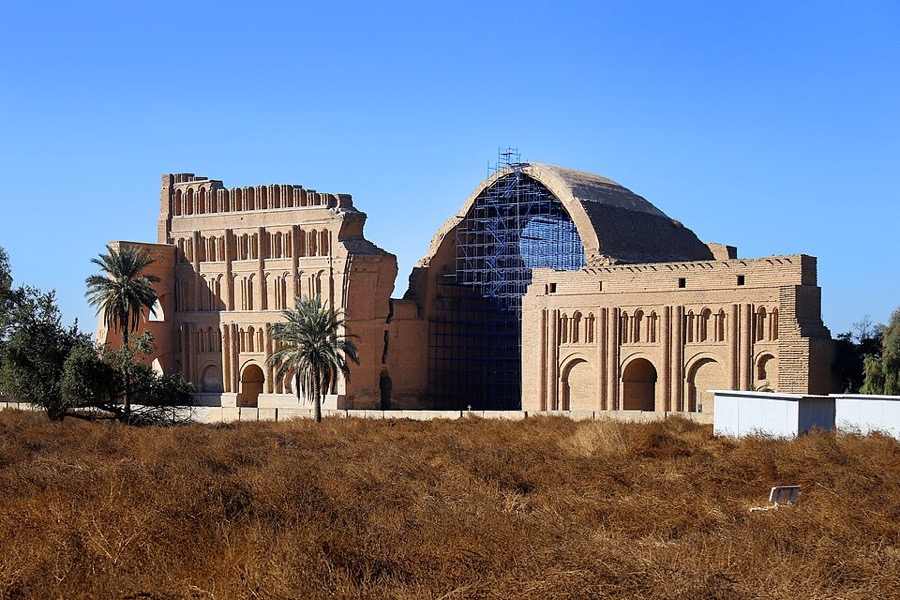
Overview
The dynasty was founded in 224 by Ardashir I of Persis, who overthrew the last Parthian king and made Ctesiphon his capital. It was self-consciously Iranian: Eranshahr, the realm of the Iranians, entered the royal titulature. Zoroastrianism was organized as a state religion with a priestly hierarchy, and the Avesta was set down in writing, though the dating of this is uncertain.
Key developments
For four centuries the empire was the rival of Rome and then Byzantium: Shapur I captured the emperor Valerian in 260, and wars flared repeatedly over Armenia and Mesopotamia. At home, strong noble houses dominated society, and around 500 the egalitarian religious movement of the Mazdakites shook the order before being suppressed. Khosrow I (r. 531–579) reformed taxation and administration and is remembered in Persian tradition as the model just king. Royal art flourished in rock reliefs and silverware, and the academy of Gundeshapur became known for medicine and translation, though its scale is partly later legend. Tradition holds that chess arrived from India and that backgammon is Persian in origin, while the Book of Lords tradition of royal history later fed the Shahnameh.
End and transition
The great war of 602–628 under Khosrow II proved exhausting: Persia briefly held Syria, Egypt, and Jerusalem before the Byzantine emperor Heraclius struck back. Drained by the war and by chaos over the succession, the empire fell to the Arab conquest of 633–654. The last king, Yazdegerd III, was murdered in 651.