Overview
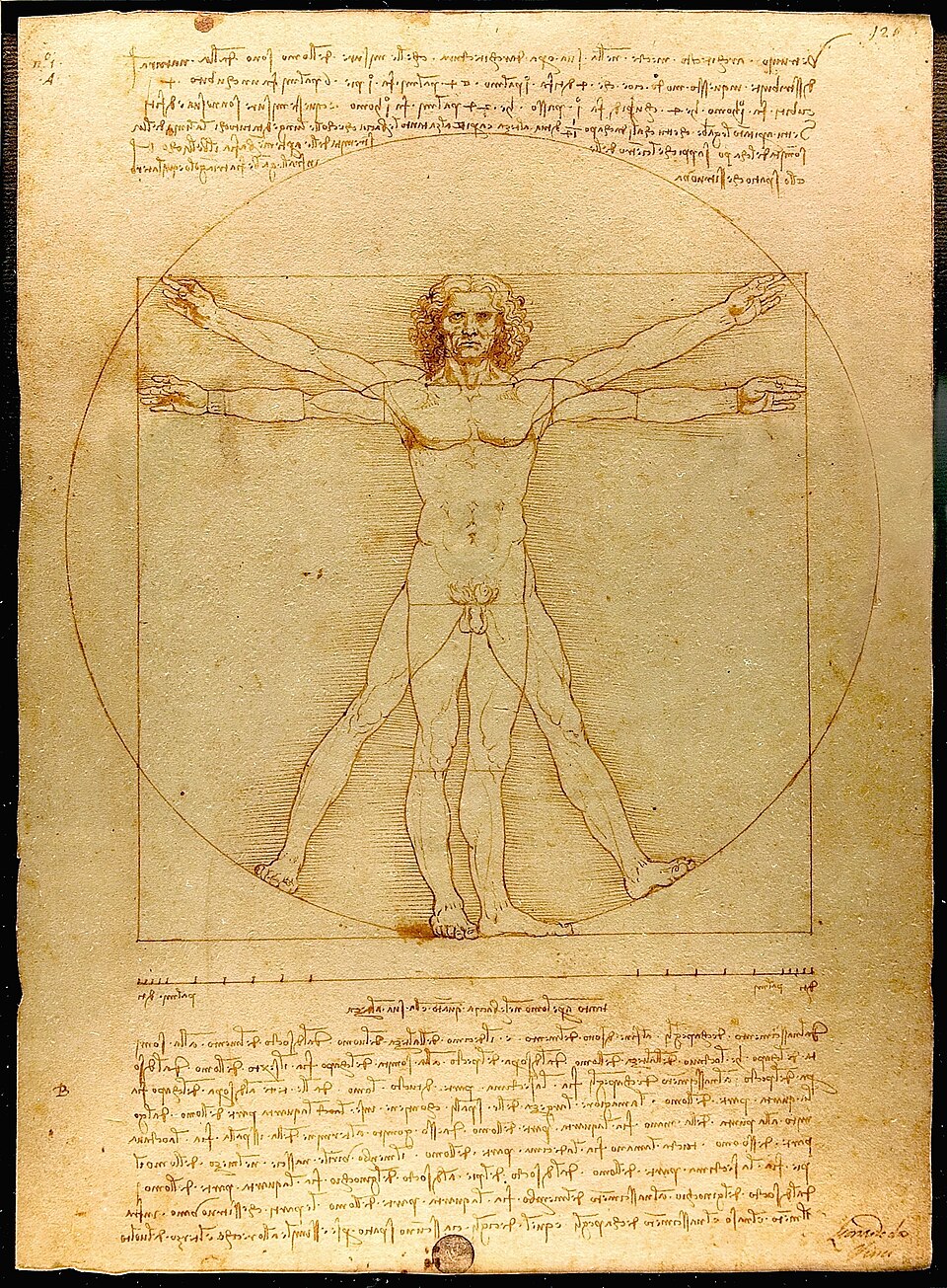
Around 1490 Leonardo drew a male figure in two superimposed poses, fitted simultaneously into a circle and a square, following the proportional scheme of the ancient Roman architect Vitruvius. Notes in Leonardo’s mirror writing frame the figure above and below.
Description
The figure’s four arms and four legs record two poses at once: arms level with legs together for the square, arms raised with legs apart for the circle. The drawing joins empirical observation to a classical ideal — the reason it is read as an emblem of Renaissance humanism.
History and legacy
The sheet is kept in the Gallerie dell’Accademia in Venice but, like all old master drawings, is light-sensitive and only rarely exhibited. It has become one of the most reproduced images in the world, shorthand for the union of art and science.