Overview
The people who lived through it did not use the name. Vasari wrote in 1550 of a rinascita of the arts, and the Renaissance became a period with edges only in the nineteenth century, in Michelet and then Burckhardt. What the period itself had was a programme: humanists hunting classical manuscripts in monastic libraries, reading them as history rather than as authority, and teaching a curriculum of grammar, rhetoric, poetry, history and moral philosophy. A demographic accident helped pay for it — the Black Death left fewer heirs holding more capital — and it accelerated after 1465, when the first printing press in Italy was set up at Subiaco.
Key developments
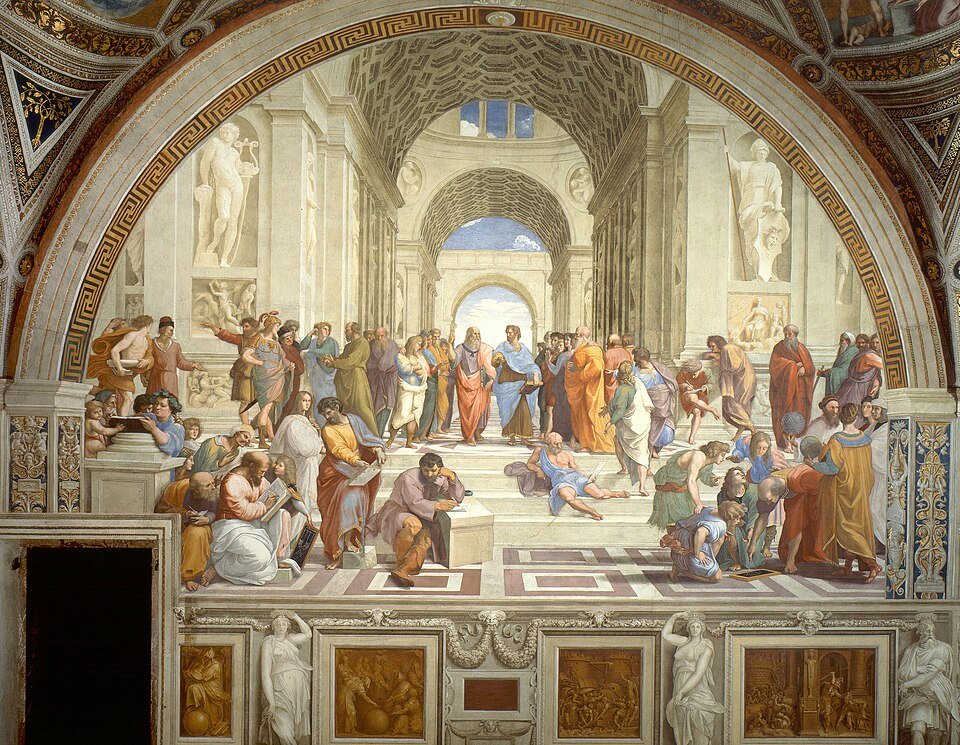
Humanists such as Petrarch revived classical texts and ideals. In art, a line from Giotto and Brunelleschi, who raised the dome of Florence’s cathedral, and Donatello led to the High Renaissance masters — Leonardo da Vinci, Michelangelo, and Raphael. Patronage spread to papal Rome, with the new St. Peter’s and the Sistine Chapel, and to Venice. In political thought Machiavelli wrote The Prince (1513). Power was divided among Florence, Milan, Venice, the Papal States, and Naples, whose balance was steadied for a time by the Peace of Lodi (1454).
End and transition
The Italian Wars (1494–1559), in which France and Spain fought over the peninsula and Rome was sacked in 1527, ended in Spanish dominance sealed by the Treaty of Cateau-Cambrésis (1559).