Who they were
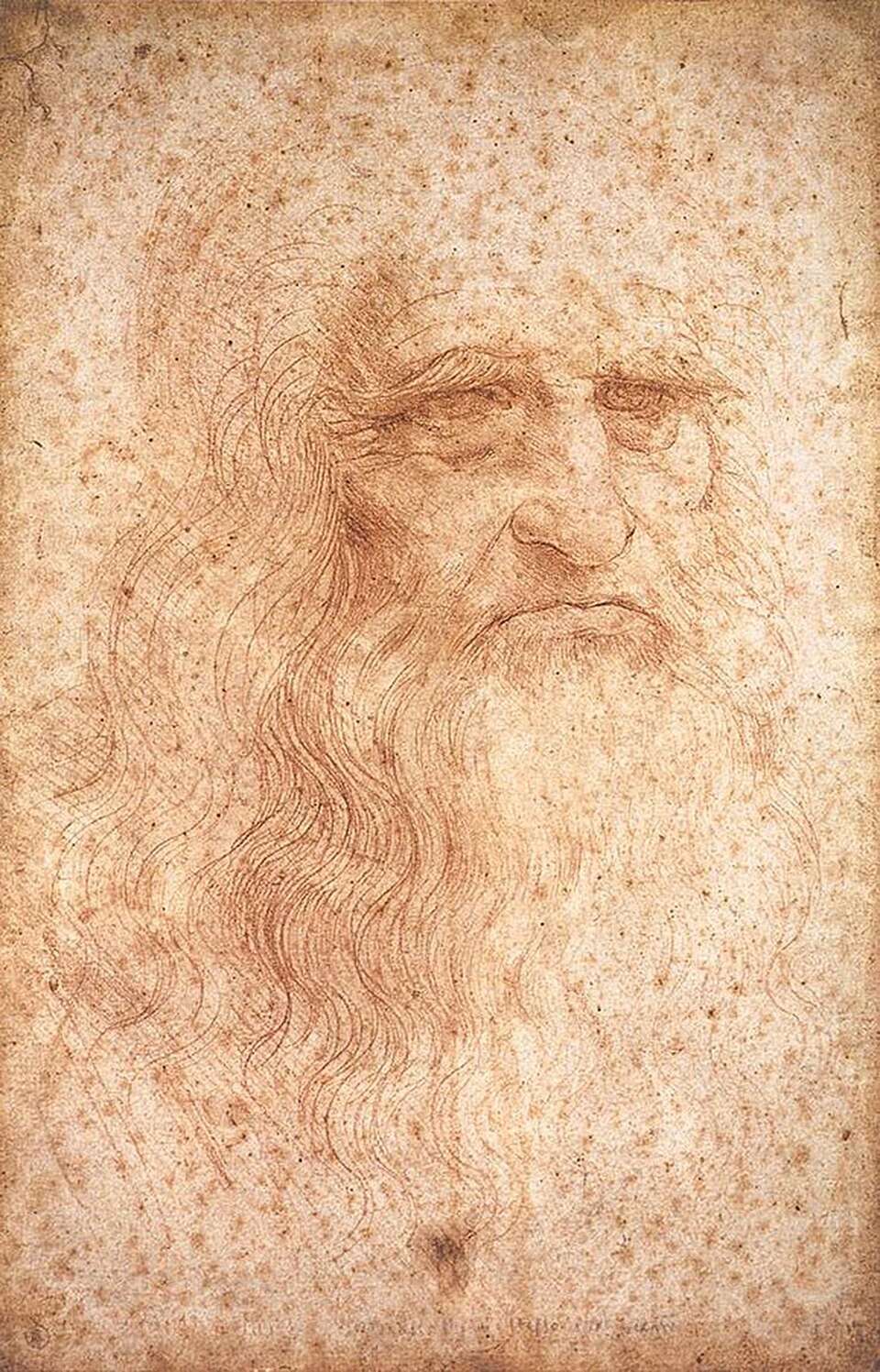
He was born in 1452 at Vinci, in the hills west of Florence, to a notary and a peasant woman who were not married — a birth that shut him out of his father’s profession and sent him into a workshop instead. He trained under Verrocchio in Florence, spent seventeen years in Milan in the service of Ludovico Sforza, and died in 1519 at Amboise in France, where François I had given him a manor house and a pension. He left thousands of pages of notebooks written right to left in mirror script; the seven thousand or so that survive are thought to be a fraction of what he wrote.
What they did
He painted the Mona Lisa and The Last Supper, and he filled notebooks with studies of anatomy, machines, water, and flight far ahead of his time. He worked in Florence, Milan, Rome, and finally France.
Legacy
A handful of his finished paintings became among the most famous in the world, and his notebooks reveal a scientific curiosity centuries ahead of his age. He embodies the Renaissance union of art and science.