Overview
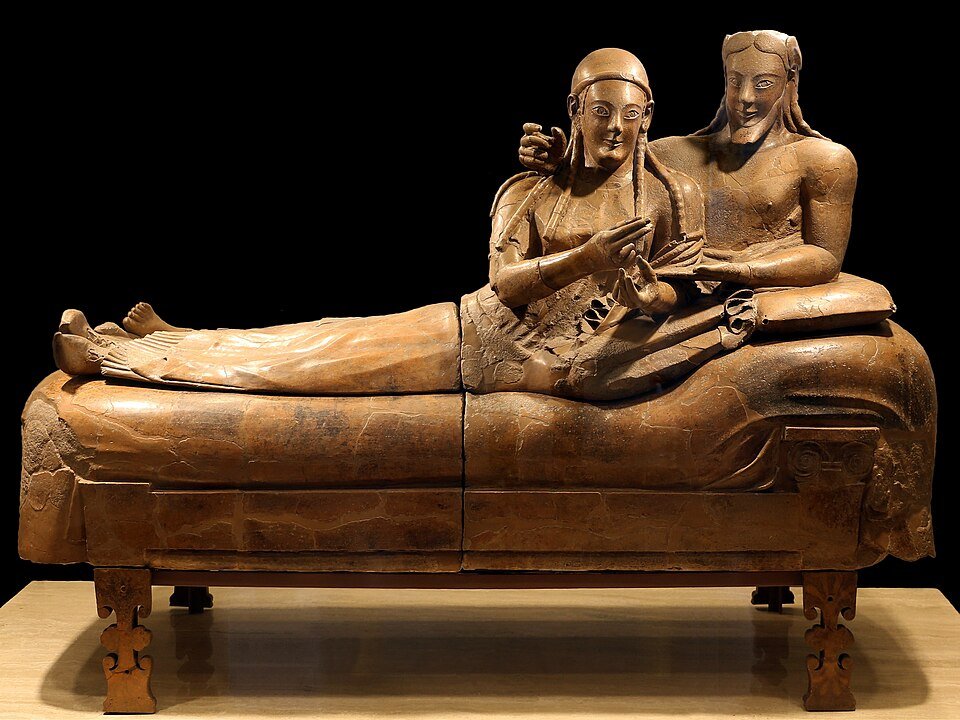
The Etruscans were the dominant pre-Roman civilization of central Italy — Etruria, roughly modern Tuscany, western Umbria, and northern Lazio — flourishing from about 900 to 100 BC, with a peak in the 7th and 6th centuries BC. Their language was non-Indo-European and is still only partly understood, written in an alphabet adapted from Greek.
Key developments
Etruria was a loose league of city-states, traditionally twelve, among them Veii, Tarquinia, Cerveteri, and Volterra. The Etruscans were known for their metalwork, their richly painted tombs, and their engineering — drainage, roads, and the arch. They deeply shaped Rome: the Etruscan kings, the Tarquins, ruled the early city, and Rome inherited from them such things as gladiatorial games, divination by augury and haruspicy, temple design, the fasces, and the toga. They traded with both Greeks and Phoenicians.
End and transition
Rome absorbed Etruria city by city, with Veii falling in 396 BC. The culture was Romanized, and full Roman citizenship came with the Social War of 90–88 BC, by which point the Etruscans had merged into Rome.