Overview
Hōryū-ji is a Buddhist temple at Ikaruga in Nara Prefecture, founded according to tradition in 607 by Prince Shōtoku and Empress Suiko. The Nihon Shoki records that the compound burned down in 670, and the present buildings were rebuilt by around 711.
Description
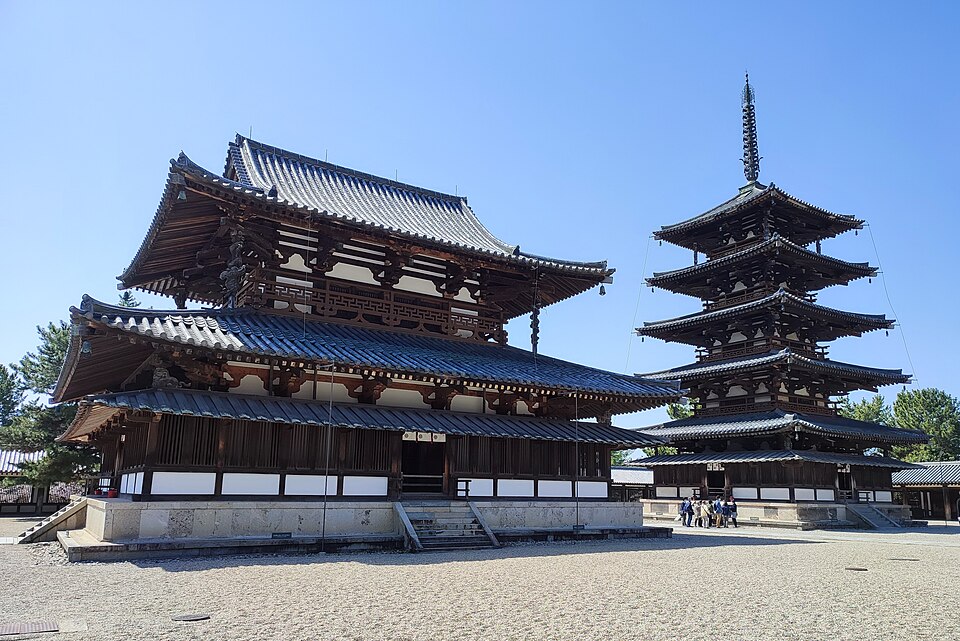
The five-storey pagoda and the Kondō main hall of the Western Precinct are the oldest surviving wooden buildings in the world, standing for roughly thirteen centuries since the rebuilding. The interior of the Kondō was adorned with celebrated seventh-century murals, and the temple’s treasures include the Kudara Kannon, a statue famed for its slender, graceful form.
History and legacy
In 1949 the Kondō murals were badly damaged by fire, an accident that spurred the enactment of Japan’s cultural-property protection law in 1950. In 1993 Hōryū-ji became one of Japan’s first UNESCO World Heritage sites.