Overview
The period is named for the Asuka region south of Nara, where the palaces sat. Buddhism officially arrived — in 538 or 552, by tradition. Some reckonings date the period from 592.
Key developments
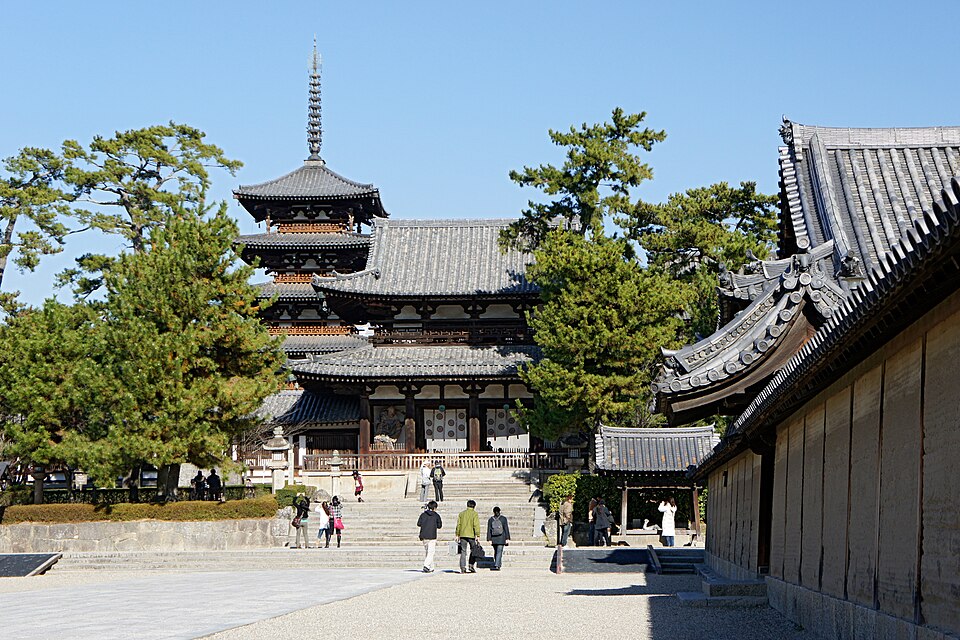
Prince Shotoku, regent under Empress Suiko, introduced the twelve cap-rank system (603) and the Seventeen-Article Constitution (604), and sent embassies to Sui China from 607 (Ono no Imoko). The Taika Reform (645) began building a centralized state on the Tang model; the Jinshin War (672) brought Emperor Tenmu to power; and the Taiho Code (701) completed the ritsuryo legal state. Hōryū-ji temple, founded in 607 and rebuilt after a fire in 670, preserves the world’s oldest surviving wooden buildings (late 7th century).
End and transition
In 710, the capital moved to Heijo-kyo (Nara).