Overview
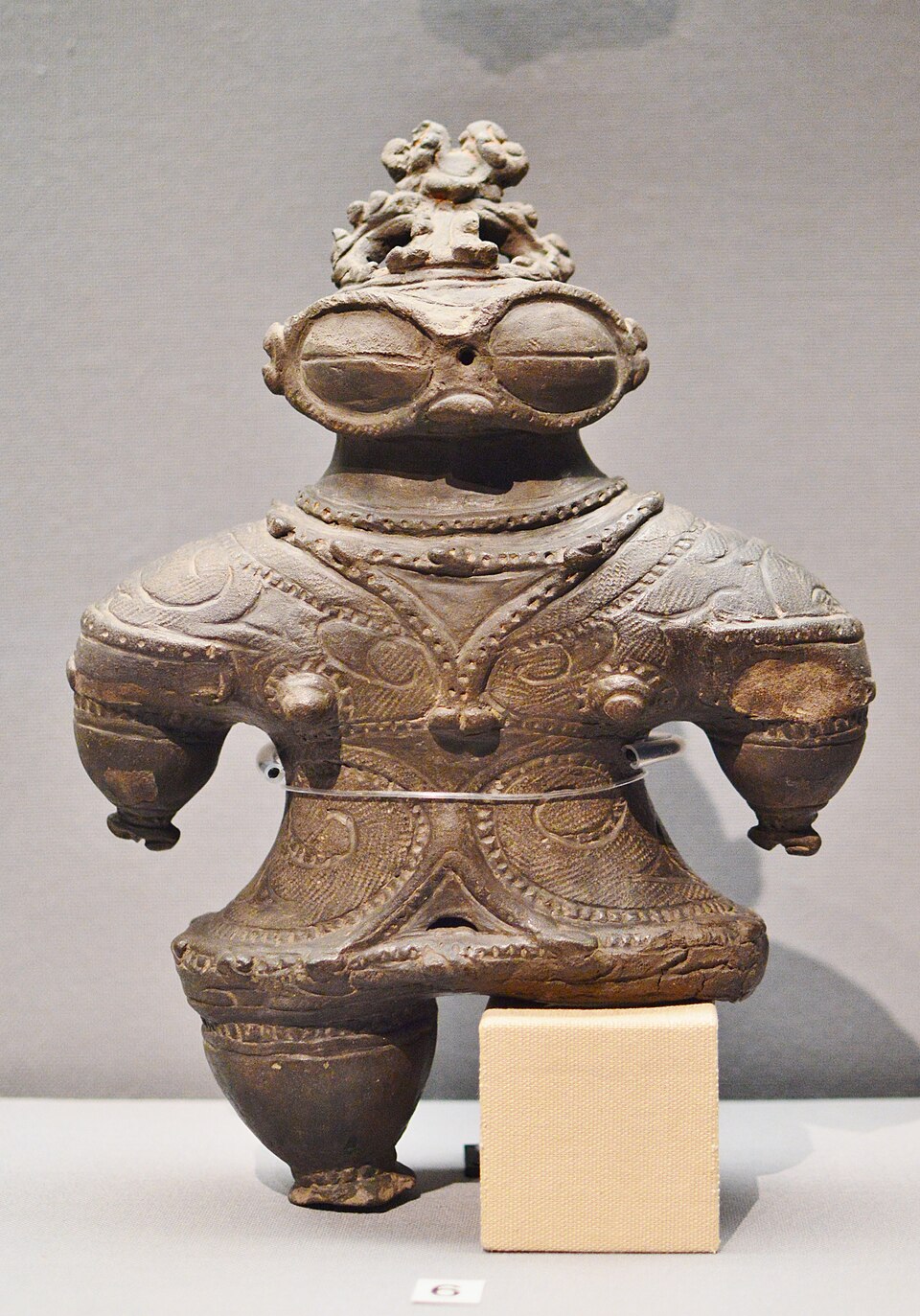
The figurine is a dogū of the Final Jōmon period (c. 1000–c. 400 BC) and the best-known work of Japan’s Jōmon culture. It was excavated in 1887 at the Kamegaoka site in Tsugaru, Aomori Prefecture.
Description
The hollow figurine stands about 34 cm tall, is missing its left leg, and is covered all over in elaborate cord-marked and incised patterns. The enormous eyes that give it its name were likened, when the type was named in the Meiji era, to the snow goggles (shakōki) worn by Arctic peoples. Its purpose is uncertain; ritual use, such as fertility or healing rites, is commonly suggested but not proven.
History and legacy
Since its excavation it has been held by the Tokyo National Museum and is designated an Important Cultural Property. Its striking form has become the visual icon of Jōmon culture, appearing again and again wherever the period is introduced.