Overview
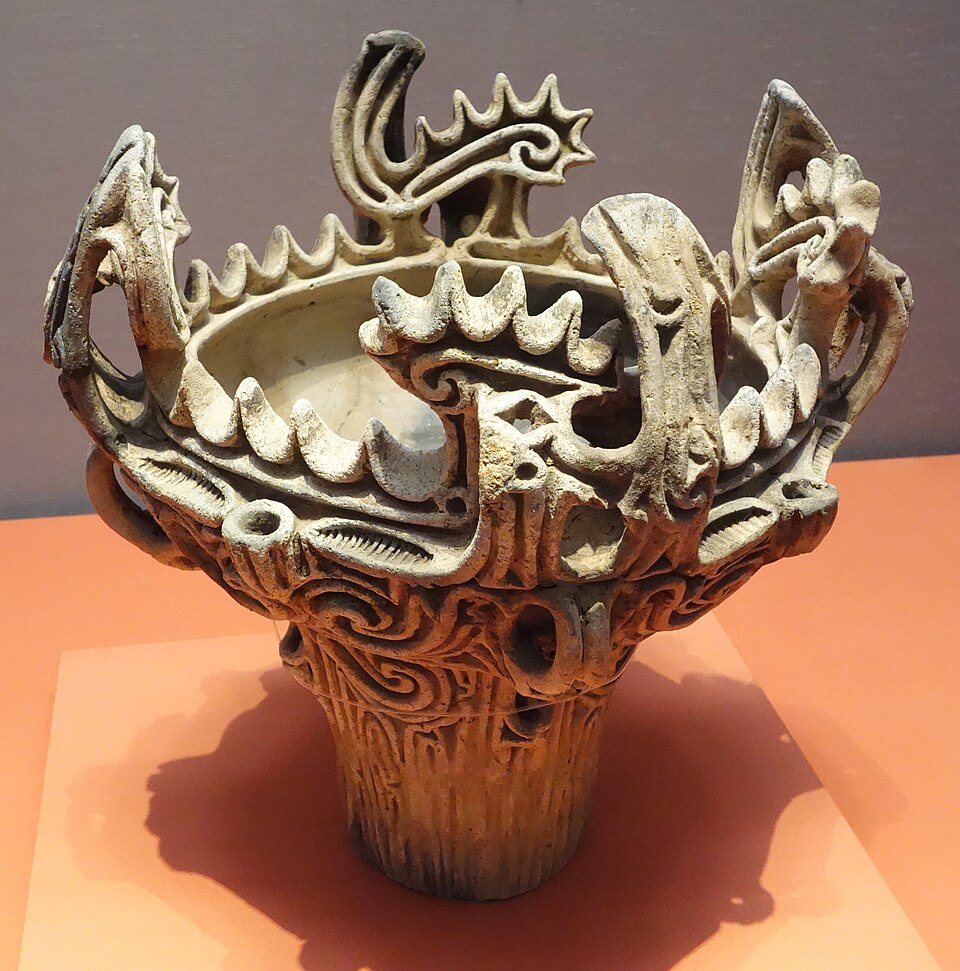
The Jōmon people lived by hunting, fishing and gathering nuts, yet were sedentary or semi-sedentary, settling in villages of pit dwellings and leaving shell mounds. The period takes its name from cord-marked pottery, one of the world’s oldest pottery traditions.
Key developments
Communities produced clay dogu figurines. The large Sannai-Maruyama settlement site in Aomori, occupied c. 3900–2200 BC, shows long-lived, organized communities.
End and transition
Wet-rice agriculture and metal tools arriving from the continent opened the Yayoi period. The conventional boundary is c. 300 BC, though some scholarship dates the transition several centuries earlier.