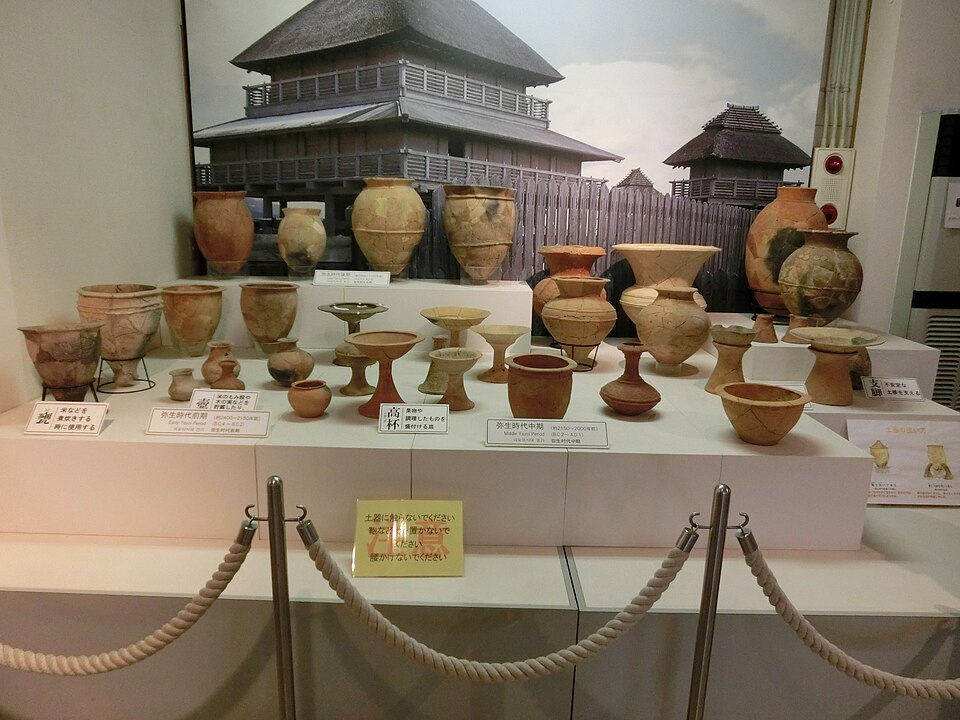
Overview
The period is named for the Tokyo district where its pottery was first identified in 1884. Farming brought social stratification and warfare, and many small “countries” (kuni) emerged. Radiocarbon work suggests the period may have begun centuries earlier than the conventional date.
Key developments
Moated settlements such as Yoshinogari in Saga attest to conflict. Chinese records document this world: a Han-era gold seal given in AD 57 to the “King of Na” (found on Shikanoshima in 1784), and the Wei chronicle (Gishi Wajinden) describing the country of Yamatai, ruled by Queen Himiko.
End and transition
Around AD 250, society transitioned into the mound-building order of the Kofun period.