What happened
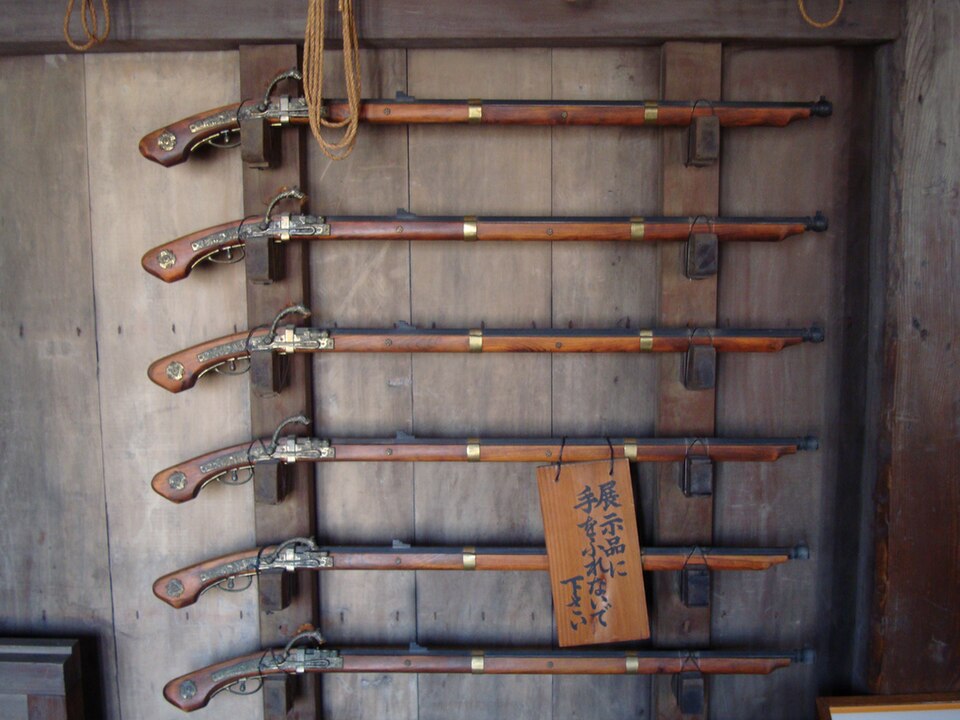
In 1543 a ship driven off course by a storm reached Tanegashima, an island south of Kyushu. The Portuguese traders aboard were the first Europeans in Japan. The island’s young lord, Tanegashima Tokitaka, bought two matchlock guns and set his smiths to copying them; the traditional account in the island’s chronicle tells of the swordsmith Yaita and the difficulty of reproducing the screw breech.
Background
Sengoku-era demand for military advantage met the expanding Portuguese trade routes in Asia.
Consequences
Japanese smiths mastered production, and within decades Japan was making guns in great numbers. By the late Sengoku wars matchlocks decided battles and reshaped castle design; “Tanegashima” became a word for the gun itself. Alongside the weapons came Portuguese trade — and, six years later, Christian missionaries. Japan’s first European century had begun.