What happened
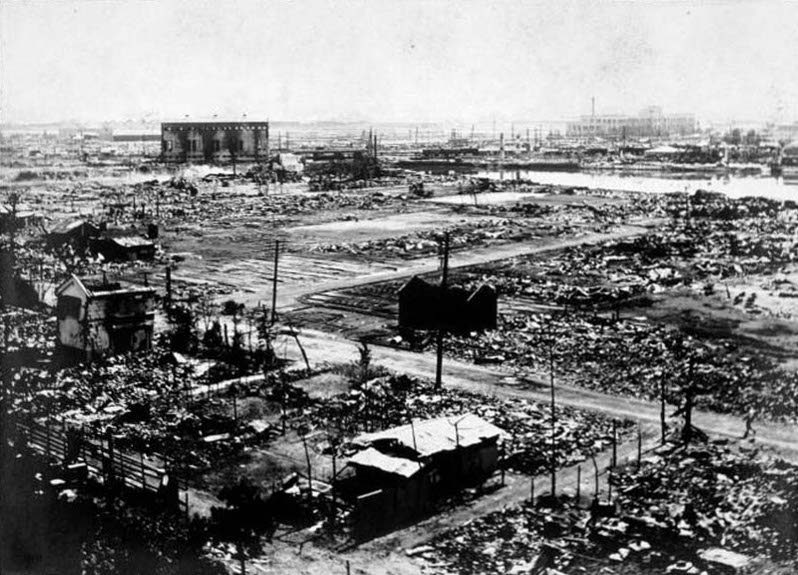
Tokyo and Yokohama were destroyed mainly by fire rather than by shaking: almost half of Tokyo’s built-up area burned, and at a former army clothing depot in Honjo, where tens of thousands had gathered with their belongings on open ground, a firestorm killed some 38,000 people in a single place. Yokohama, closer to the epicentre, lost a larger share of its buildings than Tokyo did, and the tremor cut the telegraph lines out of both cities, so the country learned what had happened from rumour before it learned it from news.
Amid false rumors, mobs — and in some cases authorities — killed thousands of Koreans, as well as Chinese and Japanese who were mistaken for Koreans.
Background
The earthquake struck at lunchtime, when cooking flames were burning across the cities, and winds at the edge of a typhoon drove the fires.
Consequences
Martial law was declared, and Goto Shinpei led an ambitious reconstruction that reshaped Tokyo. The disaster became a foundation of modern disaster planning in Japan — September 1 is now Disaster Prevention Day — and an enduring reminder of how disaster can unleash violence against minorities.