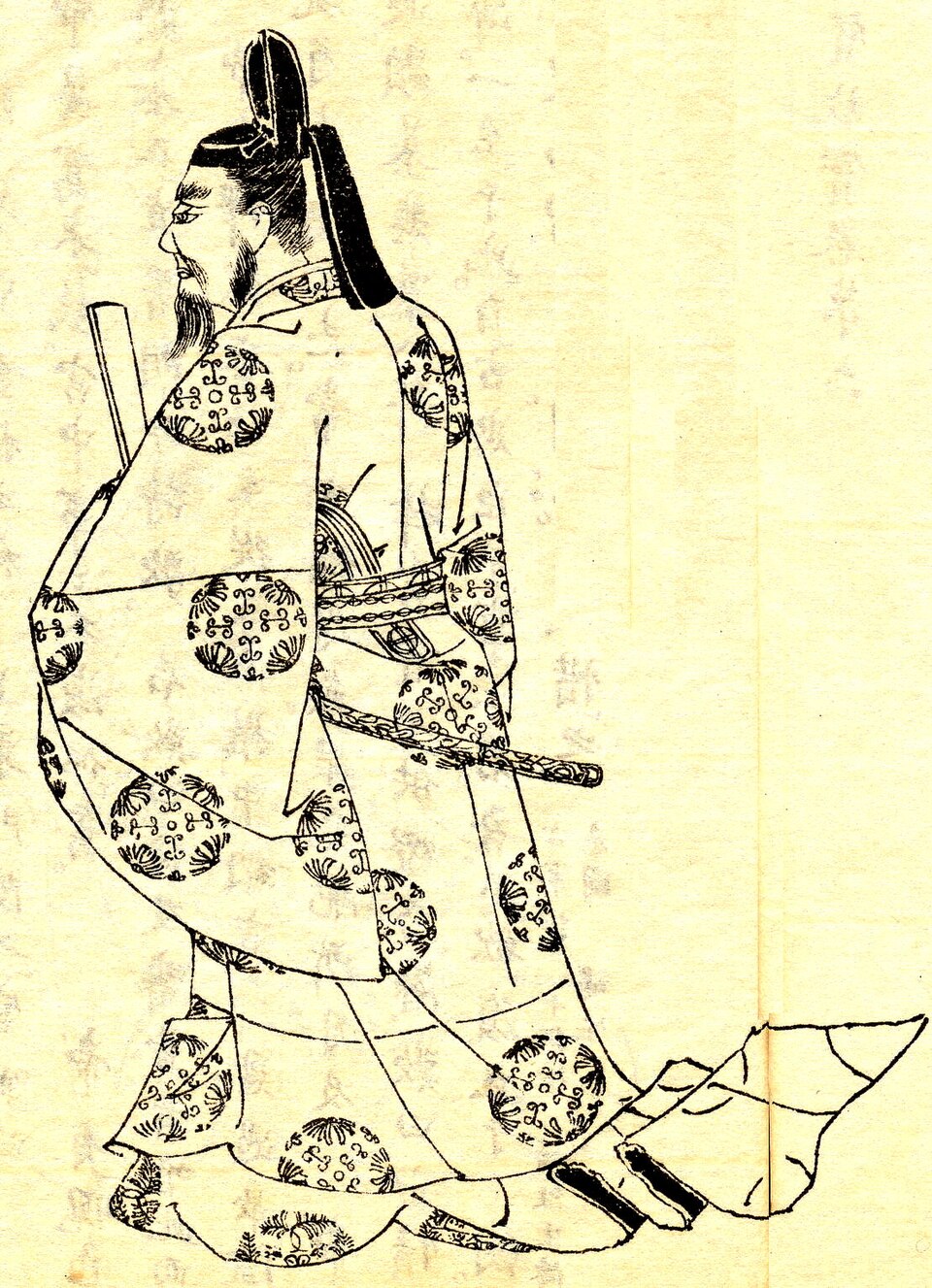
Who they were
Michinaga embodied the Fujiwara regency at its zenith. Father of four empresses, he married his daughters to successive emperors and ruled as grandfather of emperors. He held the regency (sessho) only in 1016–17; otherwise he wielded power without needing titles.
What they did
In 1018 he composed his famous poem comparing his world to the full moon, lacking nothing — as recorded in a courtier’s diary. He was patron of a brilliant court salon: Murasaki Shikibu served his daughter, Empress Shoshi. His own diary, the Mido Kanpaku-ki, survives in his hand and is inscribed in the UNESCO Memory of the World register. He built the great Hojo-ji temple and died there in 1028.
Legacy
Michinaga’s age is the aristocratic golden age the Tale of Genji reflects. He remains the model — and the peak — of rule through marriage politics.