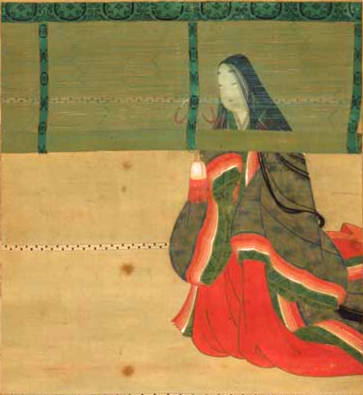
Who they were
A court lady of the Heian period, she served Empress Teishi, whom she portrays with devotion even as the empress’s family fortunes collapsed. Her real name is unknown: “Sei” comes from her family, the Kiyohara, and “Shonagon” from a court office. Even her dates, roughly c. 966 to c. 1025, are uncertain.
What they did
Around 1002 she wrote The Pillow Book, a witty collection of lists, observations and anecdotes — “Things that make the heart beat faster…” — that founded the zuihitsu (essay-miscellany) genre. Her contemporary Murasaki Shikibu criticized her in her diary; the famous “rivalry” beyond that attested remark is later embroidery. Little is known of her later life.
Legacy
With the Tale of Genji, The Pillow Book stands as the twin peak of Heian women’s prose. Its sharp, personal essay voice is one Japanese literature returns to again and again.