Overview
Liberation brought occupation zones divided at the 38th parallel — Soviet in the north, American in the south — in 1945. When unification talks failed, two states were founded in 1948: the Republic of Korea on August 15 and the Democratic People’s Republic of Korea on September 9.
Key developments
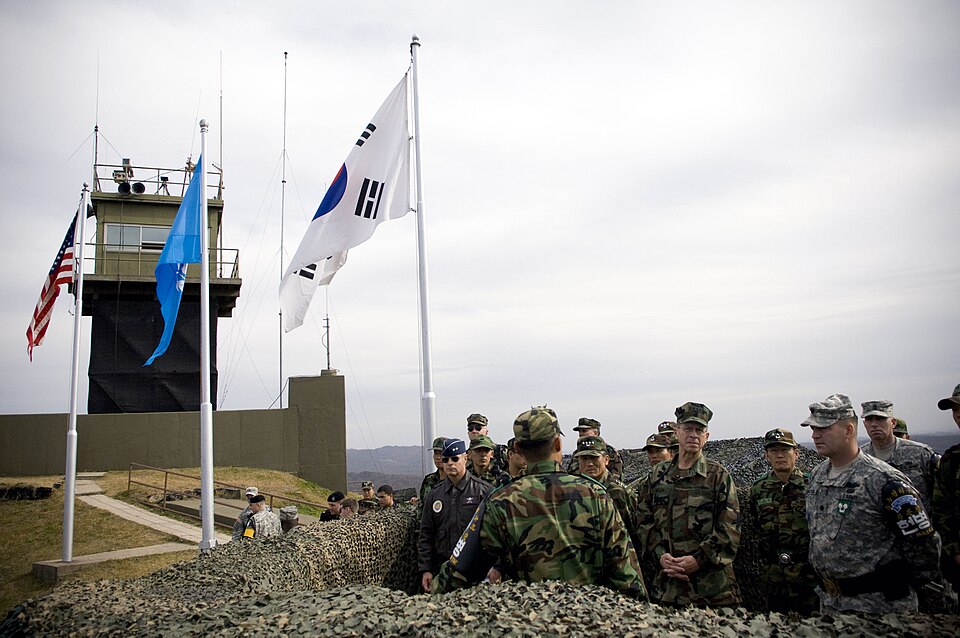
The Korean War of 1950–53 devastated the peninsula and ended in an armistice — no peace treaty — with the DMZ near the old dividing line.
The South rose from deep poverty through export-led industrialization, the “Miracle on the Han River,” won democratization in 1987, and became a global economic and cultural power. The North built a dynastic one-party state under the Kim family, suffered a famine in the 1990s in which death estimates range from hundreds of thousands to over a million, and pursued nuclear weapons.
End and transition
Inter-Korean summits in 2000, 2007, and 2018 eased tensions at moments; the division continues.