What happened
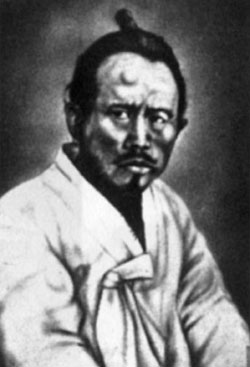
In early 1894, followers of Donghak (“Eastern Learning,” an indigenous Korean religion) and aggrieved farmers in Jeolla province rose under Jeon Bong-jun, remembered by the traditional nickname “Mung Bean General” (General Nokdu). They defeated government forces and took Jeonju in May 1894; a truce, the Jeonju Peace, set up local reform bureaus. But the court had asked Qing China for troops, Japan sent its own uninvited, and the two powers’ collision on Korean soil became the First Sino-Japanese War. The peasants rose again that autumn against Japanese intervention and were crushed at Ugeumchi in November 1894 by Japanese and government forces armed with modern weapons. Jeon Bong-jun was captured and executed in 1895.
Background
Corrupt magistrates, extortionate taxes, and growing foreign encroachment had pushed the countryside to breaking point.
Consequences
The rising precipitated the Gabo reforms and a war fought over Korea, and it left a lineage of popular protest that Korean democratic movements still invoke.