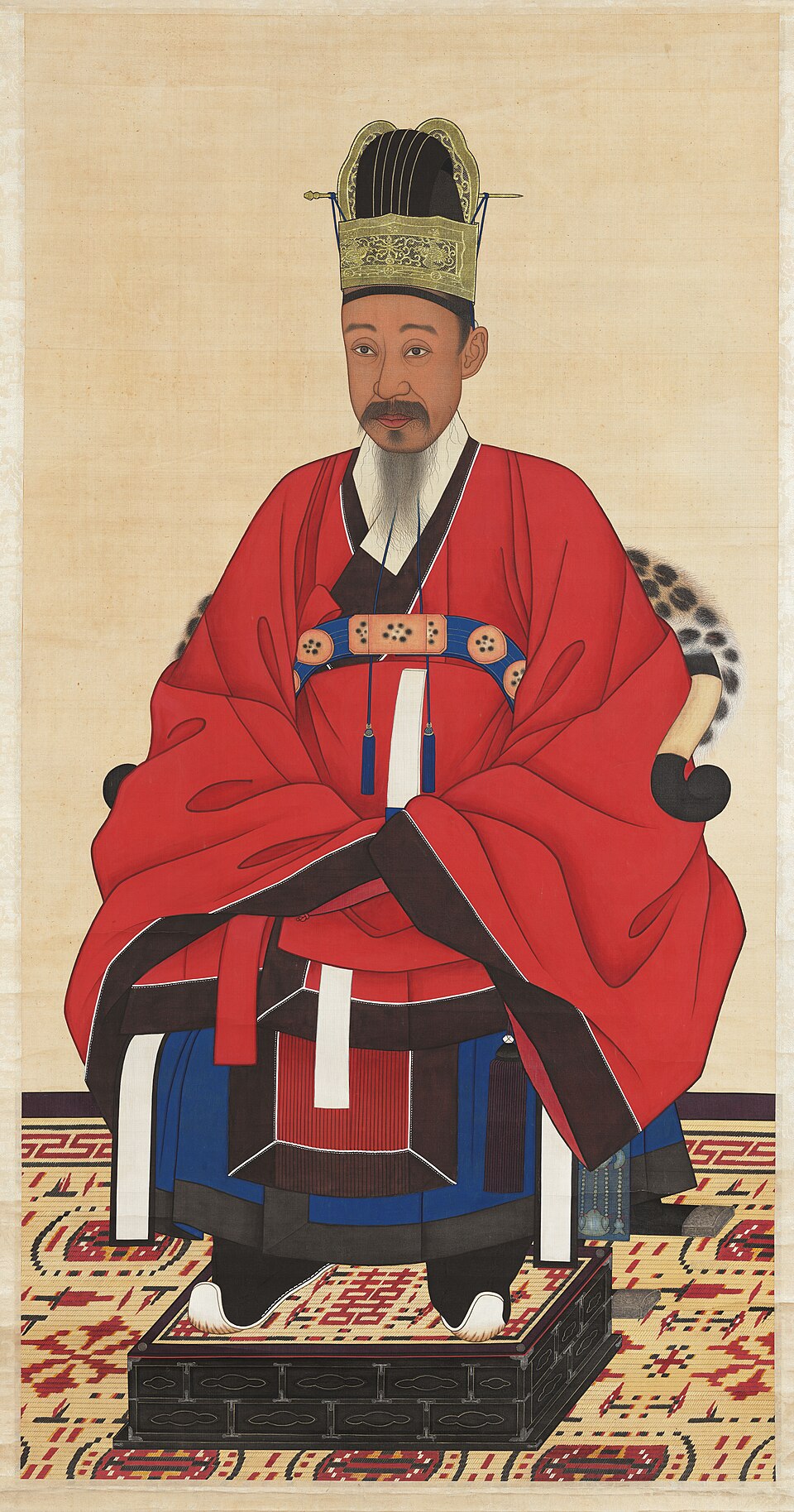
Who they were
The father of King Gojong, he took power as regent in 1864 when his young son came to the throne and dominated the Joseon court until 1873, the era’s great conservative strongman.
What they did
To strengthen the throne he curbed the entrenched clans, abolished most seowon academies (leaving 47), and rebuilt the Gyeongbokgung palace — a costly project financed with debased coinage that strained the economy. He enforced isolation: a large-scale persecution of Catholics from 1866 killed what are estimated to be thousands of Korean converts along with French missionaries, and he repelled a French punitive expedition (1866) and an American one (1871), erecting stone steles across the country vowing no peace with Western intruders.
He was ousted in 1873 as Gojong came of age. The following decades saw repeated power struggles between his faction and Queen Min’s, including his temporary abduction to China (1882–85).
Legacy
He is remembered as the last stand of the old order: assessed by some as a reformer who attacked court corruption, and by others as the isolationist who cost Korea precious time.